Job opportunities for international students in the UK

PTE Author
PTE Author
Image- A woman in front of Big Ben- 800px
Reading time: 4 minutes

Studying abroad is rarely cheap. Even if you’ve got a scholarship, a job on the side can help you live a little more comfortably during your degree. Luckily, there are lots of jobs for international students in the UK. You just need to know where to find them.  

Once you arrive, you’ll be able to do the traditional resumé drop-offs and ask about opportunities in the store. But you don’t have to wait until then to start your hunt. Jumping online and applying in advance is the best method for getting a job in the UK for international students. It’s also nice to know that you’ve got a casual or part-time position waiting for you.  

This quick guide discusses a variety of jobs in the UK for international applicants including: 

  • Part-time jobs in the UK for international students

  • Summer jobs in the UK for international students 

  • Graduate jobs for international students in the UK


Part-time jobs in the UK for international students

If you’ve got strong time-management and organization skills, working a part-time job while you study can be an effective way to earn an income. On an international student visa (Student route visa), you’re able to work up to 20 hours per week during the term. 

Common part-time jobs for international students in the UK include: 

  • Receptionist

  • Retail worker

  • Mystery shopper

  • Shelf packer 

  • Waiter/barista/bar tender

  • Student ambassador

  • Library assistant

Would you prefer a part-time job that is more academic in nature will intellectually challenge you as much as your actual course? You might consider becoming a research assistant at your university.

If you’re studying a postgraduate degree or PhD, you could even apply for part-time teaching jobs in the UK for international students. Sharing your experience with undergraduates in tutorials is a great way to solidify your own knowledge while earning some money.

The UK’s largest job databases are a good place to start your hunt:

If you’ve got a specific job in mind, try searching for a niche jobs website (e.g. C+D Jobs is a great place to find pharmacy jobs in the UK for international students).

Most UK universities have support services that can help you find a part-time job (as well as a job after you graduate). As an example, the career center at University College London helps UCL students with all types of career-related activities – including finding part-time jobs in London for international students. Similarly, the University of Edinburgh runs a careers service where international students can get advice about part-time jobs in Scotland. Visit your chosen university’s website to see what kind of career services they provide.

Summer jobs in the UK for international students 

Prefer to focus all your time and energy on your studies? That’s alright – a casual job during semester breaks might be a good alternative for you. A student visa allows you to work full-time during vacation periods.

Most of the part-time jobs listed above are also great options for working during your time off. You may also find an opportunity over summer to work as a:

  • Sales representative

  • Event assistant

  • Call center operator

  • Private tutor

The resources previously mentioned for part-time jobs are also relevant for international students finding a summer job in the UK. You should also consider talking to your university’s career support staff about any summer internships that might be available – these can provide a great experience and give you a foot in the door.

Graduate Jobs in the UK for International Students

As your final exam and graduation approach, you’ll naturally start thinking about your first job after university. The UK’s immigration program will allow you to transition from a student visa to a working visa if you secure a position that meets the relevant salary and time criteria.

This is where your university’s career center will really come in handy, so make sure you’ve made appointments with them well ahead of your last class. They can help you find and apply for UK jobs for international graduates.

Many jobsites allow you to filter your search to jobs that are marked as suitable for new graduates. Check that you’re searching in the right area/with the right filter.  

Whether you’re looking for a part-time role while you study or a full-time job to extend your stay in the UK, you’ll find a wide range of opportunities available to you.

Related Content

  • Higher-Education-Students-in-the-UK
    New DHA visa requirements for PTE Academic
    By PTE Author
    Reading time: 5 minutes

    The Australian Department for Home Affairs (DHA) recently updated their score requirements for all accepted tests of language proficiency. The new score requirements take effect from 7 August 2025.

    What are the new score requirements? 

    From 7 August, anyone who takes the test for DHA visa purposes will need to meet updated score requirements.

    The table below shows the old and new score requirements for each score.

    We have also created a more accessible version of this table at the end of this article.

  • PTE changes 2025: everything you need to know
    By PTE Author

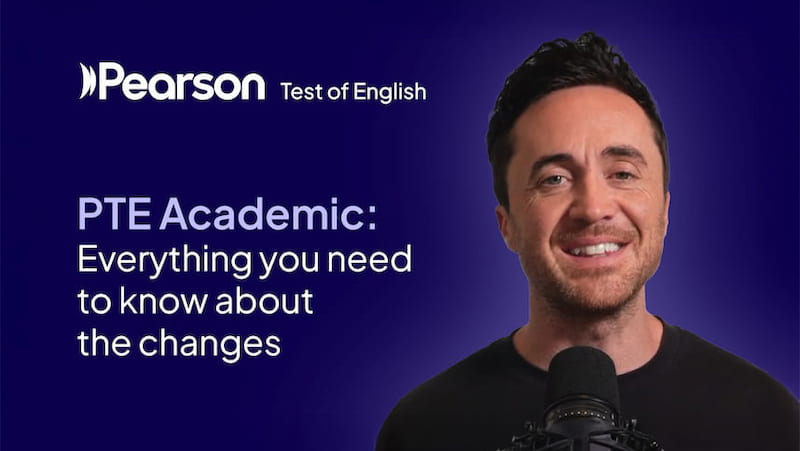
    We’ve made a few updates to the PTE Academic and PTE Academic UKVI tests. To make sure you’ve got the facts, we’ve created a short video that walks you through everything you need to know.

    Hosted by Jarrad, one of our product managers, this video covers what’s being updated, what’s staying the same, and how it all benefits you as a test taker.

    What’s covered in the video? 

    • The original 20 question types are still in the test.

    • We are adding two new speaking question types to give you even more chance to demonstrate your skills.  

    • Tips on how to prepare for the new speaking question types.

    • There are no changes to pricing, ID requirements, or score delivery time.

    • There are no changes to the way the test is taken (including the Speaking section).

  • [Asset] On test day during the test - 800 x 451 - for article use
    Busting the myths about English test centers
    By PTE Author
    Reading time: 5 mins

    By: Dan Doyle, Vice President, Assessments & Certifications, Pearson English Language Learning

    Every day, English tests help decide whether someone can start a new life abroad.

    For those taking a language test as part of a visa or migration process, the stakes couldn’t be higher. These are moments that decide futures, whether it’s studying at university, reuniting with family, or landing a first job overseas. That’s why, for tests like PTE Academic and PTE Core, test centers offer a secure, accurate, and trusted experience that governments can rely upon.

    But a few myths still persist, so let’s set the record straight.

    Myth one: “Test centers aren’t that secure”

    Reality: a test center environment provides security that starts before the test begins:

    • Biometric ID checks. Every test taker must show valid ID (like a passport) and confirm their identity with photos, palm-vein scans, and digital signatures.

    • Physical security checks. Trained staff check clothing and personal items before entry, stopping hidden notes or unauthorised materials from getting in.

    Once the test has begun, test centers combine secure-by-design exams with digital and human supervision to create a secure, fair environment:

    • Unique exams. Every PTE test is different. No two test takers get the same questions, and proctors can’t access the content.

    • Secure systems. The test runs on software and hardware fully controlled by Pearson, so it can’t be tampered with.

    • Multiple cameras, full visibility. Test centers use wide-angle CCTV to monitor the entire room.

    • Proctors in the room. Trained staff can spot hidden notes, off-screen help, and respond to anything suspicious straight away.

    Myth two: “Test centers rely on human proctors”

    Reality: human proctors play a key role, but they’re just one piece of what makes test centers secure.

    Test centers provide multiple types of security and supervision, all managed by the testing body — not the student — making them the most secure testing environment.

    As well as cameras, test centers can provide identity verification, physical checks, and in-person supervision needed for a high-stakes test.

    This real-time, multi-layered monitoring means if anything suspicious is flagged, a full investigation can be carried out centrally by Pearson, using CCTV footage, audio, AI checks, and human review.

    Myth three: “Test centers can’t detect cheating afterwards”

    Reality: Pearson carefully analyses every single test result using a combination of AI and trained human experts.

    After the test is completed, it goes through fraud analytics to identify unusual patterns or behaviours. If anything looks suspicious, the result is placed on hold and reviewed in detail by our security experts before it’s released.

    A quick summary: how test centers support high-stakes English testing

    • Biometric checks to confirm identity

    • Physical security checks to ensure no materials enter the test

    • Randomised computer-based test content for every candidate

    • Multiple cameras and full-room visibility

    • Real-time supervision by trained staff

    • AI and human experts working together to spot unusual patterns

    • A consistent environment and equipment for all test takers

    These measures make sure that every candidate has the same opportunity to succeed, and every institution can rely on the result. Behind every test is someone with a dream of a new life abroad, and PTE has the great privilege of helping them get there.

    Want to know more?

    Take a look at our latest PTE security whitepaper.