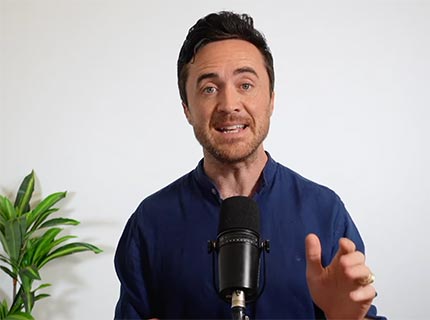

Mastering PTE Academic: A guide to the "Respond to a Situation" task

PTE Author
PTE Author

The "Respond to a Situation" task in the Speaking section of PTE Academic tests your ability to handle real-world university scenarios using appropriate language. This task simulates everyday campus interactions, requiring you to respond naturally and effectively to common situations you might encounter as a student.

Play
Privacy and cookies
By watching, you agree Pearson can share your viewership data for marketing and analytics for one year, revocable upon changing cookie preferences. Disabling cookies may affect video functionality. More info...

Understanding the task format

In this task, you'll be presented with a realistic university scenario and asked to provide a spoken response. The situations typically involve:

  • Asking your lecturer for clarification

  • Requesting help from another student

  • Resolving an issue with library staff

  • Other common campus interactions

Task structure and timing

When the task appears on your screen, you'll see:

  1. Standard instructions at the top

  2. A description of the situation and task question

  3. An audio box

  4. Recording status at the bottom

The task follows a clear three-step process:

Step 1: Read and Listen (a few seconds)  You'll have time to read the instructions while simultaneously hearing the audio description of the situation.

Step 2: Prepare (10 seconds)  After the audio stops, you have 10 seconds to organize your thoughts before the microphone opens.

Step 3: Record (40 seconds)  When you hear the tone, begin speaking. You have 40 seconds in total to deliver your complete response.

How your response is scored

The "Respond to a Situation" task uses ‘partial credit’ scoring, meaning you earn points on the quality of your answer, rather than receiving a simple right or wrong mark. Your response is evaluated on three key criteria:

1. Content

This is the most critical aspect for this particular task. To score well on content, your response must:

  • Address the situation effectively by responding to what's being asked

  • Stay on topic and achieve the goal described in the task

  • Be original and relevant using your own ideas and language, not memorized responses

  • Use a variety of appropriate expressions that suit the situation

2. Pronunciation

Your ability to produce clear, understandable speech.

3. Oral fluency

The smoothness and natural rhythm of your spoken response.

Analyzing the task description

Every task description contains three essential elements that guide your response:

1. The Situation

This tells you what's happening and provides context for your conversation.

Example: "You're working on an essay for your course and you're having difficulty organizing your ideas."

2. The Person

This identifies who you're speaking to, which directly influences the tone and formality of your response.

Example: "You approach your professor after class."

3. The Goal

This reveals what you need to achieve in the conversation.

Example: "Ask her if you could come to her office to discuss your essay." Understanding these three components is crucial for crafting an effective response that earns a high content score.

Crafting a high-scoring response

Let's examine a sample task and a high-scoring response:

Task

You're working on an essay for your course and you're having difficulty organizing your ideas. You approach your professor after class and ask her if you could come to her office to discuss your essay. What do you say to her?

Sample response

"Excuse me, professor. Would I be able to book in some time to visit you in your office and talk about the essay for our course that's due next week? I'm really struggling with how to organize my ideas in the essay. I feel I'm doing a good job with identifying the main topics in my writing, but I'm finding it difficult to come up with supporting ideas and therefore the essay is badly organized. Could I come to your office tomorrow morning to discuss this?"

Why this response scores well

Clear and polite opening  The response begins with "Excuse me, professor," which directly addresses the person and sets an appropriate tone.

Immediate main request  The speaker states the primary request early: "Would I be able to book in some time to visit you in your office?" This uses appropriate, polite language.

Clear problem description  The difficulty is explained succinctly: "I'm really struggling with how to organize my ideas."

Detailed and relevant explanation  The speaker demonstrates understanding of the issue and adds relevant details that show engagement with the problem.

Polite closing  The request is repeated with a polite question: "Could I come to your office tomorrow morning to discuss this?"

Structural strengths This response succeeds because it:

  • Meets the primary communication goal by clearly stating the request and explaining the situation

  • Demonstrates polite and appropriate language for the context (modal verbs like "Would I be able to" and "Could I come")

  • Shows flexibility in language use, including natural contractions ("I'm really," "I'm doing")

Essential tips for success

Structure your response effectively

Speak in the first person  use "I" rather than "he" or "she." Speak from your own experience as if you're actually in the situation.

Start with an appropriate opening  Choose greetings that match the context, such as "Excuse me" for formal situations or "Hi" for more casual interactions.

Explain the situation accurately  Avoid factual mistakes and ensure your explanation aligns with the prompt.

Make the request early  State your main goal clearly at the beginning of your response, and consider repeating it at the end for emphasis.

Content guidelines

Cover the main points  Include all essential details from the prompt to ensure you're addressing the task requirements.

Add relevant details  Feel free to expand your answer with extra information that demonstrates your ability to develop ideas and communicate effectively.

Stay consistent with the prompt  All added details must match the scenario. For example, if the prompt says "ask her if you can come to her office," don't say "Can I meet you in the library?" Inconsistencies will lower your content score.

Key takeaways

There isn't a single correct answer for the "Respond to a Situation" task. You can use different language and express yourself in various ways, as long as you meet the task requirements.

The most effective approach is to imagine you're actually in the moment, speaking directly with the person in the situation. This mindset will make your response flow more naturally and sound authentic.

Remember that this task reflects real-life communication skills you'll need in an academic environment. The scenarios are designed to mirror actual university interactions, so responding as you would in real life using appropriate, polite language is the key to success.

Practice is essential. The more you rehearse different scenarios before test day, the more comfortable and confident you'll become at delivering clear, effective responses under timed conditions.

Related Content

  • Image- study group 800px
    Part 1: English Speaking & Writing Test Introduction
    By PTE Author
    Reading time: 5 minutes

    Part 1 of PTE Academic will take 77-93 minutes and will test your speaking and writing skills.

    To test speaking skills, you will be assessed on your ability to produce spoken English in an academic environment.

    Your writing skills will be assessed by giving written responses in academic English using correct grammar, spelling, and structure.

    Personal Introduction

    First, you will be asked to give a personal introduction to give some information about yourself.

    You will have 25 seconds to read the prompt and prepare your response. You will only have 30 seconds to record a response and can only record this once.

    Don’t worry, your personal introduction is not scored but will be sent together with your score report to the institutions selected by you.

    For the speaking and writing test, there are seven types of questions that you will be scored on. Below, we will break down each part of this section of the test.

    Read Aloud

    The first question type to test your reading and speaking skills will be the Read Aloud assessment. In this test there are 6-7 questions.

    You will be shown a text prompt that will be up to 60 words. You will have 30-40 seconds to prepare by reading the passage. You will also have a set time to read aloud, which will vary by item, depending on the length of the text.

    To complete the question, speak clearly and straight away after you hear a tone. You must finish speaking before the progress bar on the screen reaches the end.

    You can receive a maximum of 3 points for the content spoken, a maximum of 5 points for oral fluency, and a maximum of 5 points for pronunciation.

    Repeat Sentence

    The second question type is Repeat Sentence, which will test listening and speaking skills.

    You will listen to a recording between 3-9 seconds and are given 15 seconds to answer.

    Once the microphone shows as recording, you will need to speak straight away and say all the words that the speaker uses, in the same order.

    For this question, you can receive a maximum score of 3 for content, a maximum 5 for oral fluency, and a maximum of 5 points for pronunciation.

    Describe Image

    The third question type will test speaking skills by describing an image. There are 6-7 questions.

    You will be shown an image and have 25 seconds to study the image and prepare your response. For this task, use the Erasable Noteboard Booklet to take short notes.

    After a short tone is heard, start speaking straight away. You will have 40 seconds to answer and must finish speaking before the progress bar reaches the end.

    In this question type, you can receive a maximum of 5 points for content, a maximum of 5 points for oral fluency, and a maximum of 5 points for pronunciation.

    Re-tell Lecture

    The fourth question type, Re-tell Lecture, will test your listening and speaking skills. There are 3-4 questions in this test.

    You will be given a prompt of up to 90 seconds and will have 40 seconds to answer.

    Audio will be played straight away and you may also see an image related to the audio. While you are listening use the Erasable Noteboard Booklet to take short notes.

    Once the audio finishes you have 10 seconds to prepare. To complete the task, in detail, you will need to cover the situation, characters, aspects, actions, and developments given in the recording.

    You can receive a maximum score of 5 points on content, a maximum of 5 points on your oral fluency, and a maximum of 5 points for pronunciation.

    Answer Short Question

    The fifth question type, Answer Short Question, will assess listening and speaking skills. There are 10-12 questions in this test.

    Here, you will be given a prompt of 3-9 seconds and will have 10 seconds to answer the question.

    You will be required to answer a short question with a clear, simple, single word or a few words. This will not test general knowledge, it will simply test your vocabulary.

    You will receive 1 point per correct word. No points are given for no response or incorrect response.

    Summarize Written Text

    In the first question type in the writing section, you will be required to Summarize Written Text, which will test reading and writing skills.

    You will read a text of up to 300 words and have 10 minutes to write your summary. You will do 2-3 of these questions depending on the combination of tasks in the given test.

    In this assessment, you must write just one sentence. Try using the Erasable Noteboard Booklet to take notes of the main points.

    Make sure to include the main points of the text in a full, single sentence of no more than 75 words.

    You can receive a maximum score of 2 points for content, maximum 1 point for the formal requirements, a maximum of 2 points for grammar and a maximum of 2 points for vocabulary.

    Essay

    The last question type of the Speaking and Writing Test will test writing skills.

    In this question type, you will be provided with 2-3 sentences of text prompt and have 20 minutes to answer, by writing a 200-300 word argumentative essay on a given topic.

    Time management is important for this task as you will need to plan, write and proofread your essay.

    In this question, there are many parts where you can receive points. You can receive a maximum of 3 points for the content, maximum of 2 points for the formal requirements and maximum 2 points for development, structure and coherence.

    You can also receive a maximum score of 2 points for grammar, maximum 2 points for general linguistic range, maximum 2 points for vocabulary range and a maximum of 2 points for no spelling errors.

    There is a total of 15 points that you can pick up in this question type.

    What's next?

    Read more about Part 2: Reading Test Introduction.

    Want more prep ideas?

    Plus, explore Smart Prep, which combines all our practice materials in one place, so it's easier for you to stay on track with your PTE preparation.

    • Smart Prep is a clear path to test day, guiding you through the official paid and free resources available for your test

    • It can be accessed whether you’ve booked a test or not – just create, or sign in to your myPTE account

    • Preparation materials include guided practice tests, introductory videos, video courses and test tips.

    Ready to get started?

  • Image, student, 800px x 451px
    Australian loans for international students
    By PTE Author
    Reading time: 5 minutes

    It’s not hard to understand why so many international students want to move to Australia. The country has a world-class education system, excellent climate, and high quality of life. But studying in Australia can be expensive – and you need to be financially prepared before you take the leap.  

    In this blog, we’ll help you get started. We’ll explore the student loan options available for international students in Australia, as well as other ways to fund your studies.  

    How much money will I need? 

    Before you begin to research student loans, it’s important to understand how much it costs to live and study in Australia. You can use the Course Search Tool to find out detailed tuition fee for your dream course and the Cost of Living Calculator to estimate the living cost based on the city you want to move to.  

    What student loans in Australia could I be eligible for? 

    Australia’s student loan system is known as the Higher Education Loan Program (HELP).  Unfortunately, HELP can only be accessed by Australian citizens or individuals who hold a humanitarian visa. However, there are still lots of other student loans available for international students in Australia.  

    University loans 

    Universities across Australia provide loans for local and international students. Most institutions offer both short-term and long-term loans; these can help students cover emergencies, as well as pay for bigger expenses.  

    Here are a few examples of what some universities offer:  

    • The University of Melbourne will loan eligible students up to$5,000 AUD ($3,883 USD) if they have an Australian co-signer. They’ll loan students up to $3,000 AUD ($2,330 USD) if their co-signer lives overseas or isn’t an Australian citizen/ permanent resident. 

    • The University of Sydney offers loans up to $2,000 ($1,550 USD), which can be paid back up to two years after graduation.  

    • Students in need of financial assistance at Monash University can take out loans between $750-$3,000 AUD ($544 – $2,330 USD), to be paid back within 6-12 months. 

    Universities across Australia offer similar loans. It’s best to check directly with your institution to see exactly what loans are available to students – and to make sure you’re eligible.  

    International student loan schemes  

    You might be eligible to take out federal student loans in your home country to study in Australia. For example, students from the U.S., Canada, Sweden, Norway, or Denmark who attend the University of Sydney can access government funding from home.  

    Private loans  

    A private loan is one of the simplest forms of international student loans in Australia: you borrow money from a bank or similar lender and repay the loan (with interest) over an agreed-upon period of time. These loans can be secured – which means they’re tied to collateral – or unsecured. But with unsecured loans, interest rates are usually higher. 

    How else can I pay for my studies? 

    Student loans aren’t the only way to pay for your education in Australia. Here are a few other options to consider:  

    Work in Australia  

    Many international students are attracted to Australia because they know they’ll be able to work. Unlike other studies abroad destinations, you can work up to 48 hours every two weeks while studying and unlimited hours during study breaks on an Australian student visa. Even more, the minimum wage in Australia is $24.10 per hour or $915.90 per week – meaning many international students are able to pay for some of the costs associated with living in Australia while they study.   

    Apply for scholarships 

    There are a number of scholarship opportunities for international students in Australia – both funded by the government, and universities. Some, like Australia Awards scholarships, support students with full tuition, living costs, and airfare. Check out the Australian Government’s search tool to find a scholarship that’s right for you.  

    Read more: scholarships for international students in Australia 

    Take out a private loan in your home country

    To apply for a student visa in Australia, you need to prove you have sufficient funds. For this reason, many students decide to take out a private bank loan in their home country before coming to study in Australia.

    As you can see, there are lots of ways to fund your studies in Australia as an international student. But everyone’s financial situation is different, so we recommend doing lots of research to find a loan you feel confident about – and one that will work for you both during, and after university.

    Still, deciding where in the world you want to study? Check out our article types of loans for international students, which explores more loan options in Canada, the U.S., and the U.K.

    We are not immigration agents. For all up-to-date information about visa rules and regulations, see the official guidelines on the Australia Department of Home Affairs website.

    Last updated 20 December 2024.

  • Image- scholarships, 800px x 451px
    Scholarships for international students in the UK
    By PTE Author
    Reading time: 3 minutes

    The UK is home to some of the most prestigious universities in the world. And, being awarded a scholarship to study in the UK can give you access to a top-level education at a more affordable price.  

    So, how do you apply? UK university scholarships are offered by both the UK government and individual universities – and are available for undergraduate, postgraduate, and PhD students alike. In this blog, we’ll highlight some of the top scholarships for international students in the UK:  

    Undergraduate scholarships in the UK