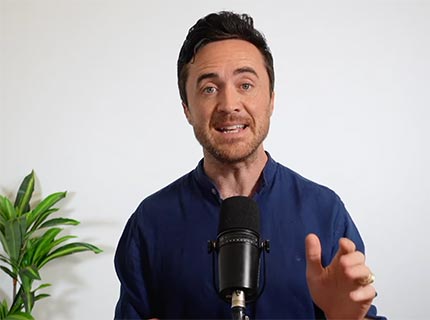
Mastering PTE Academic: A guide to the "Respond to a Situation" task

PTE Author
PTE Author

The "Respond to a Situation" task in the Speaking section of PTE Academic tests your ability to handle real-world university scenarios using appropriate language. This task simulates everyday campus interactions, requiring you to respond naturally and effectively to common situations you might encounter as a student.

Play
Privacy and cookies
By watching, you agree Pearson can share your viewership data for marketing and analytics for one year, revocable upon changing cookie preferences. Disabling cookies may affect video functionality. More info...

Understanding the task format

In this task, you'll be presented with a realistic university scenario and asked to provide a spoken response. The situations typically involve:

  • Asking your lecturer for clarification

  • Requesting help from another student

  • Resolving an issue with library staff

  • Other common campus interactions

Task structure and timing

When the task appears on your screen, you'll see:

  1. Standard instructions at the top

  2. A description of the situation and task question

  3. An audio box

  4. Recording status at the bottom

The task follows a clear three-step process:

Step 1: Read and Listen (a few seconds)  You'll have time to read the instructions while simultaneously hearing the audio description of the situation.

Step 2: Prepare (10 seconds)  After the audio stops, you have 10 seconds to organize your thoughts before the microphone opens.

Step 3: Record (40 seconds)  When you hear the tone, begin speaking. You have 40 seconds in total to deliver your complete response.

How your response is scored

The "Respond to a Situation" task uses ‘partial credit’ scoring, meaning you earn points on the quality of your answer, rather than receiving a simple right or wrong mark. Your response is evaluated on three key criteria:

1. Content

This is the most critical aspect for this particular task. To score well on content, your response must:

  • Address the situation effectively by responding to what's being asked

  • Stay on topic and achieve the goal described in the task

  • Be original and relevant using your own ideas and language, not memorized responses

  • Use a variety of appropriate expressions that suit the situation

2. Pronunciation

Your ability to produce clear, understandable speech.

3. Oral fluency

The smoothness and natural rhythm of your spoken response.

Analyzing the task description

Every task description contains three essential elements that guide your response:

1. The Situation

This tells you what's happening and provides context for your conversation.

Example: "You're working on an essay for your course and you're having difficulty organizing your ideas."

2. The Person

This identifies who you're speaking to, which directly influences the tone and formality of your response.

Example: "You approach your professor after class."

3. The Goal

This reveals what you need to achieve in the conversation.

Example: "Ask her if you could come to her office to discuss your essay." Understanding these three components is crucial for crafting an effective response that earns a high content score.

Crafting a high-scoring response

Let's examine a sample task and a high-scoring response:

Task

You're working on an essay for your course and you're having difficulty organizing your ideas. You approach your professor after class and ask her if you could come to her office to discuss your essay. What do you say to her?

Sample response

"Excuse me, professor. Would I be able to book in some time to visit you in your office and talk about the essay for our course that's due next week? I'm really struggling with how to organize my ideas in the essay. I feel I'm doing a good job with identifying the main topics in my writing, but I'm finding it difficult to come up with supporting ideas and therefore the essay is badly organized. Could I come to your office tomorrow morning to discuss this?"

Why this response scores well

Clear and polite opening  The response begins with "Excuse me, professor," which directly addresses the person and sets an appropriate tone.

Immediate main request  The speaker states the primary request early: "Would I be able to book in some time to visit you in your office?" This uses appropriate, polite language.

Clear problem description  The difficulty is explained succinctly: "I'm really struggling with how to organize my ideas."

Detailed and relevant explanation  The speaker demonstrates understanding of the issue and adds relevant details that show engagement with the problem.

Polite closing  The request is repeated with a polite question: "Could I come to your office tomorrow morning to discuss this?"

Structural strengths This response succeeds because it:

  • Meets the primary communication goal by clearly stating the request and explaining the situation

  • Demonstrates polite and appropriate language for the context (modal verbs like "Would I be able to" and "Could I come")

  • Shows flexibility in language use, including natural contractions ("I'm really," "I'm doing")

Essential tips for success

Structure your response effectively

Speak in the first person  use "I" rather than "he" or "she." Speak from your own experience as if you're actually in the situation.

Start with an appropriate opening  Choose greetings that match the context, such as "Excuse me" for formal situations or "Hi" for more casual interactions.

Explain the situation accurately  Avoid factual mistakes and ensure your explanation aligns with the prompt.

Make the request early  State your main goal clearly at the beginning of your response, and consider repeating it at the end for emphasis.

Content guidelines

Cover the main points  Include all essential details from the prompt to ensure you're addressing the task requirements.

Add relevant details  Feel free to expand your answer with extra information that demonstrates your ability to develop ideas and communicate effectively.

Stay consistent with the prompt  All added details must match the scenario. For example, if the prompt says "ask her if you can come to her office," don't say "Can I meet you in the library?" Inconsistencies will lower your content score.

Key takeaways

There isn't a single correct answer for the "Respond to a Situation" task. You can use different language and express yourself in various ways, as long as you meet the task requirements.

The most effective approach is to imagine you're actually in the moment, speaking directly with the person in the situation. This mindset will make your response flow more naturally and sound authentic.

Remember that this task reflects real-life communication skills you'll need in an academic environment. The scenarios are designed to mirror actual university interactions, so responding as you would in real life using appropriate, polite language is the key to success.

Practice is essential. The more you rehearse different scenarios before test day, the more comfortable and confident you'll become at delivering clear, effective responses under timed conditions.

Related Content

  • [Asset] Friends walking along a beach
    G’day opportunity: Why so many people are moving to Australia
    By PTE Author
    Reading time: 5 minutes

    From world-famous beaches to stunning coral reefs, hopping wildlife to bbq-loving locals, it’s no wonder that Australia claims two top ten spots in the Global Liveability Index

    Whether you’re looking for bustling cities or quiet countryside, Australia is full of potential, with education, career opportunities and a sense of community being the biggest draws.  

    But how did people choose their new life down under? We talked to over 3000 PTE test takers who’ve migrated to Australia to find out why they made the move and what they love about their new home.  

    High-quality education

    According to our survey, over 64% identify Australia’s high-quality education system as a major pull. Australia takes in a huge number of international students, with over 810,000 enrolled to study in Australia from 2023.  

    A warm welcome and support for their existing international student population only encourages more to apply, creating a strong international community.  

    Those looking to study in Australia have a choice of more than 40 universities offering huge choices in academic programs.  

    On a student visa, you have the option to work part-time during your studies, allowing international students to support themselves while learning, and making Australia an affordable option for those looking to study in an English-speaking country.  

    Career opportunities

    One of the most appealing aspects of moving to Australia is the number of career opportunities. Top sectors shaping the economy and providing great employment opportunities include mining (14.3%), health and education (12.8%), and finance (7.4%).  

    Our PTE test takers told us they were able to find well-paid work, with some even going on to start businesses and buy a home down under. More than nine in ten (91%) are working full-time, with 72% employed in skilled professions with a median income of $93k.  

    Over 87% said they were looking to progress their careers in Australia, suggesting they’re feeling fulfilled in their work and optimistic about their long-term career options in the country. PTE Academic is recognized by a wide range of professional bodies for their skills assessments, including engineering, nursing and midwifery and accounting to name a few. This opens many doors for pursuing a career in Australia.   

    Sense of community

    A warm welcome and sense of community are what makes a new place become home. Beyond education and career opportunities, social integration was one of the main advantages of migrating to Australia.  

    We found that 84% of people that had moved to Australia say they’ve successfully built community connections, with 89% having experienced acts of kindness from others. Movers also report wanting to contribute to their new communities, with more than 1 in 10 taking part in volunteer activities.  

    This two-way integration makes Australia an attractive place to put down roots and become a part of the country’s diverse social fabric.

    A long-term move

    So many respondents shared their positive experiences of moving to Australia, with 8 in 10 saying Australia met or exceeded their expectations and 9 in 10 encouraging others to make the move and join them.  

    Many see it as a long-term move with 70% wanting to stay and gain permanent residency.   

    From education and employment opportunities to vibrant international communities, it’s easy to see why so many English-speakers are saying “G’day” to a new chapter in Australia.  

    Making it happen with PTE

    It takes ambition and commitment to start a new life abroad — along with the right support.  

    Our survey found that 66% of migrants felt their success at work in Australia was down to their English language skills.  

    PTE Academic is recognised by the Australian government for all visa categories and is accepted by 100% of universities in Australia.

    Designed to be faster, fairer, and simpler, 87% prefer PTE over similar tests. So, if the Great Australian Dream sounds like the right fit for you, take the first step with PTE.

  • [Asset] Smiling student
    Practice for PTE with Smart Prep’s Guided Practice Tests
    By PTE Author
    Reading time: 5 minutes

    Are you preparing for the Pearson Test of English (PTE) and looking for an effective way to practice? Look no further! Smart Prep’s Guided Practice Tests are your ticket to a more confident test day. These free mock tests are designed to give you a realistic experience of the PTE, helping you understand the test format and identify areas for improvement.  

    What Are Guided Practice Tests?

    Smart Prep offers Guided Practice Tests for both PTE Academic and PTE Core. Each category includes five tests: one short test that provides a condensed version of the exam, and four other tests focused on individual skills — speaking, writing, listening, and reading. These tests are available for free through Smart Prep as long as you create a myPTE account. Each skill-specific test contains the same number of questions as the actual exam, guiding you through the process with sample answers and feedback. 

    How to use Guided Practice Tests effectively

    For Speaking and Writing questions:

    1. Create an exam-like environment: 

    • Remove any distractions from your workspace. 

    • Ensure your microphone is working properly. 

    • Start the test in a quiet setting.

    2. Read the introductory page: 

    • Understand how many questions are in each section. 

    3. Follow instructions carefully: 

    • Pay attention to any preparation time allowed for each question. 

    • Record yourself during the preparation time if applicable. 

    4. Record your answers: 

    •  Stick to the time limits (e.g., 30-40 seconds for Read Aloud). 

    5. Self-review: 

    • Listen to your recorded answer. 

    • Note what you did well and areas for improvement. 

    6. Compare with sample answers: 

    • Click on the sample answer button to listen to and read the sample response. 

    • Compare your answer with the sample, focusing on aspects like fluency and content.   

    7. Iterate and improve: 

    • Move on to the next question and repeat the steps. 

    • Give yourself ample time to review and understand the sample answers. 

    For Reading and Listening questions:

    1. Read instructions carefully: 

    • Understand what each question is asking for. 

    2. Attempt the question: 

    • Submit your answers after completing each question.   

    3. Review feedback: 

    • Check which answers were correct and which were incorrect. 

    4. Revise incorrect answers: 

    • Try to understand why your initial answer was wrong. 

    • Re-attempt the question until you get it right.  

    5. Analyze your performance:

    • Note any patterns in the types of questions you find difficult. 

    • Focus your study time on these areas. 

    The Benefits of Guided Practice Tests 

    Practicing with Smart Prep’s Guided Practice Tests will help you: 

    • Identify weak areas: Understand which types of questions you find challenging. 

    • Improve skills: Focus your preparation time on areas that need the most work. 

    • Build confidence: Familiarize yourself with the test format and question types. 

    • Enhance performance: Use sample answers to learn what a good response looks like and how to achieve it. 

    Why Smart Prep? 

    Smart Prep offers a structured, comprehensive, and user-friendly approach to PTE preparation. By using Guided Practice Tests, you’ll gain valuable insights into your performance and know exactly where to focus your efforts. Whether you find reading difficult or struggle with speaking fluently, these practice tests will guide you on your preparation journey.

    So, what are you waiting for? Start using Smart Prep’s Guided Practice Tests today and take the first step towards acing your PTE!

    Happy studying, and good luck on your PTE journey!

  • Group of nurses standing together in a hospital and clapping.
    Growing demand for international nurses in Canada
    By PTE Author

    An ongoing nursing shortage means well-trained international nurses are in high demand with many job openings to pick from.

    There’s no one cause of the nursing shortage in Canada; a combination of several factors mean the supply of nursing staff isn’t enough to meet demand:

    1. Aging population

    Canada's population is aging rapidly, with seniors projected to make up to 25% of the population by 2036. This demographic shift is increasing the demand for healthcare services, including nursing care.

    2. Retiring workforce

    A substantial portion of Canada's nursing workforce is nearing retirement age. According to the Registered Nurses’ Association of Ontario, a third of registered nurses providing direct care were over 50 years old in 2020, meaning a wave of retirements is on the horizon.

    3. Burnout

    The COVID-19 pandemic affected the mental health of as many as 83% of registered nurses in Ontario, with 34% considering leaving the profession as a result.

    4. Limited training capacity

    Despite growing demand, Canadian nursing schools have limited capacity to train new nurses. This bottleneck in education contributes to the ongoing shortage.

    The Canadian government has made a commitment to address the nursing shortage, allocating $2.8 million CAD to the Canadian Association of Schools of Nursing to develop a National Nurse Residency program.

    How many nursing job openings are there in Canada?

    Nurses are in high demand across Canada’s ten provinces and three territories, with significant numbers of job openings across the country.

    That demand is increasing, with the number of job vacancies for registered nurses and registered psychiatric nurses increasing by almost 10% in the third quarter of 2023.

    To help address the shortage, Immigration Refugees and Citizenship Canada (IRCC) has allocated $115 million CAD over the next five years, and $57 million CAD ongoing for expanding Canada's Foreign Credential Recognition Program, helping international nurses get their qualifications recognized by the Canadian government.

    Which Canadian provinces and territories have the highest demand for nurses?

    The biggest Canadian province is also the hungriest for nurses. In 2023, the Ontario Nurses Association reported a shortage of about 24,000 nurses, and the province has held the dubious honor of having the lowest nurse-to-population ratio for almost a decade.

    French-speaking Quebec isn’t far behind in the nursing need department. Canadian think tank MEI projected a shortage of about 10,000 nurses in 2021. French is the official language of the province, so you’ll need to have professional level French or be willing to learn.

    With an increasing number of residents over the age of 65, prairie province, Alberta, is facing its own nursing crunch. The provincial government even announced a Health Workforce Strategy with a pillar dedicated to attracting international healthcare workers.

    Nova Scotia and New Brunswick are also worth highlighting as they’ve recently introduced an accelerated license process for international nurses.

    Where do international nurses come from?

    According to the Canadian Institute for Health Information, about 8.9% of registered nurses in Canada in 2021 were internationally educated, highlighting the significant contribution of foreign-trained professionals to Canada's healthcare system.

    Nurses relocate to Canada from the Philippines and India, with many coming from the southern state of Kerala, known for its nursing education programs. More recently, there’s a growing trend of Nigerian, Jamaican, and Chinese nurses moving to call Canada home.

    From getting ahead in their careers to feeling welcome, here are eight key reasons why international nurses are drawn to Canada.

    What’s next?

    If you’re eyeing up a move North, you’ll need to submit your nursing credentials, take the NCLEX-RN to qualify for a Canadian nursing license if needed, and show you’ve got the necessary language skills.

    Get your move off to a stress-free start with the Pearson Test of English (PTE).

    With no additional speaking exam, PTE covers all four skills in one test using computer-based assessments to remove bias. It’s the faster, fairer, simpler way to evidence your English skills and start your next chapter.