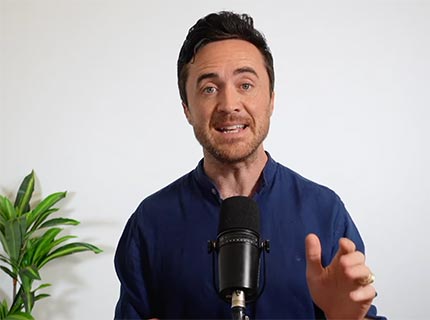

Mastering PTE Academic: A guide to the "Respond to a Situation" task

PTE Author
PTE Author

The "Respond to a Situation" task in the Speaking section of PTE Academic tests your ability to handle real-world university scenarios using appropriate language. This task simulates everyday campus interactions, requiring you to respond naturally and effectively to common situations you might encounter as a student.

Play
Privacy and cookies
By watching, you agree Pearson can share your viewership data for marketing and analytics for one year, revocable upon changing cookie preferences. Disabling cookies may affect video functionality. More info...

Understanding the task format

In this task, you'll be presented with a realistic university scenario and asked to provide a spoken response. The situations typically involve:

  • Asking your lecturer for clarification

  • Requesting help from another student

  • Resolving an issue with library staff

  • Other common campus interactions

Task structure and timing

When the task appears on your screen, you'll see:

  1. Standard instructions at the top

  2. A description of the situation and task question

  3. An audio box

  4. Recording status at the bottom

The task follows a clear three-step process:

Step 1: Read and Listen (a few seconds)  You'll have time to read the instructions while simultaneously hearing the audio description of the situation.

Step 2: Prepare (10 seconds)  After the audio stops, you have 10 seconds to organize your thoughts before the microphone opens.

Step 3: Record (40 seconds)  When you hear the tone, begin speaking. You have 40 seconds in total to deliver your complete response.

How your response is scored

The "Respond to a Situation" task uses ‘partial credit’ scoring, meaning you earn points on the quality of your answer, rather than receiving a simple right or wrong mark. Your response is evaluated on three key criteria:

1. Content

This is the most critical aspect for this particular task. To score well on content, your response must:

  • Address the situation effectively by responding to what's being asked

  • Stay on topic and achieve the goal described in the task

  • Be original and relevant using your own ideas and language, not memorized responses

  • Use a variety of appropriate expressions that suit the situation

2. Pronunciation

Your ability to produce clear, understandable speech.

3. Oral fluency

The smoothness and natural rhythm of your spoken response.

Analyzing the task description

Every task description contains three essential elements that guide your response:

1. The Situation

This tells you what's happening and provides context for your conversation.

Example: "You're working on an essay for your course and you're having difficulty organizing your ideas."

2. The Person

This identifies who you're speaking to, which directly influences the tone and formality of your response.

Example: "You approach your professor after class."

3. The Goal

This reveals what you need to achieve in the conversation.

Example: "Ask her if you could come to her office to discuss your essay." Understanding these three components is crucial for crafting an effective response that earns a high content score.

Crafting a high-scoring response

Let's examine a sample task and a high-scoring response:

Task

You're working on an essay for your course and you're having difficulty organizing your ideas. You approach your professor after class and ask her if you could come to her office to discuss your essay. What do you say to her?

Sample response

"Excuse me, professor. Would I be able to book in some time to visit you in your office and talk about the essay for our course that's due next week? I'm really struggling with how to organize my ideas in the essay. I feel I'm doing a good job with identifying the main topics in my writing, but I'm finding it difficult to come up with supporting ideas and therefore the essay is badly organized. Could I come to your office tomorrow morning to discuss this?"

Why this response scores well

Clear and polite opening  The response begins with "Excuse me, professor," which directly addresses the person and sets an appropriate tone.

Immediate main request  The speaker states the primary request early: "Would I be able to book in some time to visit you in your office?" This uses appropriate, polite language.

Clear problem description  The difficulty is explained succinctly: "I'm really struggling with how to organize my ideas."

Detailed and relevant explanation  The speaker demonstrates understanding of the issue and adds relevant details that show engagement with the problem.

Polite closing  The request is repeated with a polite question: "Could I come to your office tomorrow morning to discuss this?"

Structural strengths This response succeeds because it:

  • Meets the primary communication goal by clearly stating the request and explaining the situation

  • Demonstrates polite and appropriate language for the context (modal verbs like "Would I be able to" and "Could I come")

  • Shows flexibility in language use, including natural contractions ("I'm really," "I'm doing")

Essential tips for success

Structure your response effectively

Speak in the first person  use "I" rather than "he" or "she." Speak from your own experience as if you're actually in the situation.

Start with an appropriate opening  Choose greetings that match the context, such as "Excuse me" for formal situations or "Hi" for more casual interactions.

Explain the situation accurately  Avoid factual mistakes and ensure your explanation aligns with the prompt.

Make the request early  State your main goal clearly at the beginning of your response, and consider repeating it at the end for emphasis.

Content guidelines

Cover the main points  Include all essential details from the prompt to ensure you're addressing the task requirements.

Add relevant details  Feel free to expand your answer with extra information that demonstrates your ability to develop ideas and communicate effectively.

Stay consistent with the prompt  All added details must match the scenario. For example, if the prompt says "ask her if you can come to her office," don't say "Can I meet you in the library?" Inconsistencies will lower your content score.

Key takeaways

There isn't a single correct answer for the "Respond to a Situation" task. You can use different language and express yourself in various ways, as long as you meet the task requirements.

The most effective approach is to imagine you're actually in the moment, speaking directly with the person in the situation. This mindset will make your response flow more naturally and sound authentic.

Remember that this task reflects real-life communication skills you'll need in an academic environment. The scenarios are designed to mirror actual university interactions, so responding as you would in real life using appropriate, polite language is the key to success.

Practice is essential. The more you rehearse different scenarios before test day, the more comfortable and confident you'll become at delivering clear, effective responses under timed conditions.

Related Content

  • Image- UK, 1080px
    Applying for the EU Settlement Scheme: what you need to know to get British citizenship
    By PTE Author
    Reading time: 6 minutes

    At the beginning of this year, new Brexit-related rules went into effect in the UK and the EU.  They’ll have a big impact on immigration and travel – including on how people will be able to move to the UK to live, work and study. 

    If you’re an EU citizen—and started living in the UK before 2021—immigration rules won’t change for you until June. But after that, you might have to apply for the EU Settlement Scheme to stay in the country. 

    More than 4.3 million people have been approved for the scheme already. And, they’re on the path to receiving a British passport. With the EU Settlement Scheme, EU citizens can apply for British citizenship after 12 months. 

    In this blog, we’ll explore more about the scheme and how to apply for citizenship. We will also look at the English language requirements you’ll need to keep in mind as an EU citizen. 

    Keep in mind: We aren’t immigration agents. For the latest information and official updates, please visit the GOV UK website. 

    First, what is the EU Settlement Scheme?

    The EU Settlement Scheme is a program set up by the UK government. It allows EU, Swiss, and EEA citizens to keep living in the UK after June 2021. It’s free to apply, and once you do, you’ll be granted either: 

    • Settled status – You’ll get this if you’ve lived in the UK continuously for five years. You will be able to stay in the UK indefinitely provided you don’t leave the UK for 5 years consecutively.

    • Pre-settled status – You’ll get this if you’ve lived in the UK for less than five years. With pre-settled status, you’ll only be able to stay in the UK for another five years but can always apply for settled status later if you want to settle permanently. 

    With settled status, as we mentioned, you’ll also have the opportunity to apply for British citizenship. Although, many people have decided to apply for citizenship right away instead of going through the scheme – for example, if they have a British parent or spouse. 

    With citizenship, you’ll have the right to live permanently in the UK with a British passport, which means you’ll no longer be subject to immigration controls. You’ll also be able to work and study in the UK, sponsor your family members to migrate, access NHS healthcare, access public benefits and pensions  – and of course, vote in elections. 

    The Mayor of London’s website has a comprehensive FAQ on the EU Settlement Scheme. You can also find out more information on the official GOV UK page.

    How to apply for British citizenship 

    If you’re interested in applying for British citizenship, there are a few ways to do so. For example, you could be eligible if you: 

    • have a British civil partner or spouse;

    • were born in the UK;

    • have a British parent;

    • have settled status under the EU Settlement Scheme. 

    The requirements for citizenship are often different, depending on why you’re applying and how you’re eligible. But if you’re applying under the EU Settlement Scheme, in most circumstances you’ll have to show you: 

    • have been living in the UK for more than five years and will continue to do so;

    • are of good character;

    • have passed the Life in the UK Test, which consists of 24 questions on British traditions;

    • are knowledgeable in English, Welsh, or Gaelic. You will also need to take an approved English test for UK citizenship.

    Learn more about how to apply for British citizenship with the scheme here

  • Image- Singapore, 800px x 451px
    How to study in Singapore
    By PTE Author
    Reading time: 5 minutes

    Asian students have long been drawn to Western universities. In fact, in 2018 and 2019, China sent more students to study in the UK than any other country. But now as Asian countries seek to attract more international students themselves, many learners are choosing to study closer to home instead.  

    After all, studying within the region offers plenty of benefits. Not only do Asian universities provide a world-class education at a more affordable price. But they are also “among the world’s best at enhancing their alumni’s job market prospects,” states the QS Graduate Employability Rankings. This is a big draw, considering a recent report found that 81% of respondents from eight Asian countries wanted to study at a foreign university to improve employment. 

    So, what are some of the top study abroad locations for Asian students? And what do learners need to keep in mind when choosing a destination? In this guide, we’ll focus on Singapore: 

    Singapore at a glance 

    Singapore is modern, sustainable, and multicultural. This makes it an attractive place to study for students from around the region. Malay, Mandarin, Tamil, and English are all recognized as official languages, although English is most commonly spoken. In fact, almost 40% of the population in Singapore speaks English at home.  

    Singapore invests heavily in human capital. For example, it spends more than 20% of its budget on education each year. It comes as no surprise, then, that Singapore’s education system is listed as one of the best in the world by OECD’s Programme for International Student Assessment (PISA). 

    Universities in Singapore 

    There are dozens of universities and colleges in Singapore. The two most popular universities are the National University of Singapore (NUS) and Nanyang Technological University (NTU). Both universities are ranked among the top 20 in the world. According to QS World University Rankings 2021, NUS holds the spot for 11. NTU is ranked number 13. About a quarter of learners at both universities are international students.  

    Even more, according to QS, NUS ranks number 24 for graduate employability.  

    To study at a Singaporean institution, you must apply directly through the admissions office. This is usually done at the beginning of the year. 

    If you’re a second language speaker or haven’t studied full-time at an English institution, you will also need to prove your English proficiency. PTE Academic is a computer-based language test that provides unbiased and secure results and can help you qualify for studying and migrating abroad.  

    Students wanting to attend a college in Singapore – including the Singapore Institute of Management Global Education (SIM GE), the East Asia Institute of Management, and LASALLE College of the Arts – will need a PTE Academic score of 42. In general, universities look for a minimum PTE Academic score between 55 and 62. Here’s a more detailed breakdown of what some popular universities require: 

    • National University of Singapore–62 

    • Nanyang Technological University– 55 

    • Singapore University of Technology and Design (SUTD) – 62 

    However, students are strongly advised to always check with their own university or college to see exactly what PTE Academic score is needed.  

    Getting your visa 

    If you want to study in Singapore, you will need to have a Student Pass. To apply, you must already be accepted as a full-time student at an academic institution. With a Student Pass, you’ll be able to work up to 16 hours a week during the school term. However, you can only do this if you go to an approved institution.  

    Find out exactly how to apply for a Student Pass here.  

    Cost of living 

    Singapore is considered one of the best student cities in the world; it has great weather, a vibrant mix of cultures, and an excellent food scene. However, compared to other Asian countries, it is on the expensive side. International student tuition fees sit at about $18,700 USD a year. To get an idea about how much it costs to live in Singapore, check out the government’s cost of living calculator.  

    Financial aid 

    It’s important to keep in mind that Singapore does offer financial aid for citizens, permanent residents, and international students. The Ministry of Education provides these grants under The Tuition Grant Scheme.  

    The amount of money offered depends on the area of study and the status of each student in Singapore. This table is a good resource, showing what was available to students studying at NTU in 2020. You can see that for international students, the grants start at about $7,700 USD.   

    To accept a Tuition Grant, students who aren’t citizens must sign a Tuition Grant Agreement. This states that they will work in Singapore for a minimum of three years after graduation.  

    For more grant information, visit the Ministry of Education website.  

    Want to study in Singapore?

    With PTE Academic you can achieve your dreams.  

    Our unbiased English tests are trusted as proof of English proficiency by universities in Singapore –  and results are typically ready within 2 days. 

    Find out where you can take PTE Academic now

  • Image- listening to podcast 800px x 451px
    5 podcasts to help you learn English
    By PTE Author
    Reading time: 6 minutes

    Podcasts are a great way to practice your English skills. You can listen to them while studying from your desk at home. Or you can listen to them on the go – like while you’re driving, cooking, cleaning, or working out.  

    We especially love podcasts because, since many are conversational, they give you the chance to hear how English speakers interact in real life and expose you to lots of interesting new languages.  

    If you’re planning to take PTE Academic this year, podcasts are great practice for the listening section of the exam – for which you’ll have to answer questions based on audio or video clips.   

    So, are you ready to immerse yourself in the world of English language podcasts? In this blog, we’ll explore some of the best podcasts to learn English:

    1. 6 Minute English 

    6 Minute English is a podcast by BBC Learning English. Each week, the BBC hosts chat about everyday situations – and it makes for a really interesting listen. Ever wonder if trees are intelligent? Or if humans could live in cities underwater? Well, this could be the podcast for you. 

    Overall, 6 Minute English is great for people with an intermediate level of English. It’s short (you guessed it, just 6 minutes) and each episode includes a vocabulary list and transcript. 

    2. But Why

    But Why is another fun podcast for intermediate-level English learners. Kids record questions for the show, and host Jane Lindholm brings in an expert to answer them on air.  

    But Why is produced by Vermont Public Radio in the U.S. And while the podcast is made for kids – it answers questions like ‘why do dogs have tails’ or ‘why are whales so big’ – Lindholm speaks slowly and charismatically, making it easy to understand. Of course, if you have kids, But Why is also a good show to listen to as a family.   

    Each episode is about 30 minutes long and includes a transcript. Even more, the episodes come with free learning worksheets (like this one), which you can use to practice your English writing and listening comprehension skills.  

    3. Luke’s English Podcast 

    Luke’s English Podcast is hosted by Luke Thompson, an English teacher, and comedian from the U.K. The podcast covers a big range of topics; one episode may cover pronunciation tips, and the next may simply feature a conversation between Thompson and his wife. 

    The show is often touted as one of the best podcasts to learn English (it’s been downloaded more than 60 million times) and overall, is a good way to practice your British English skills. The episodes are on the longer side, and some are up to two hours long. 

    While the podcasts are free, Thompson also produces paid content for listeners to subscribe to – giving them access to things like extra podcast episodes, worksheets, tests, and pronunciation drills.  

    4. Criminal

    Many podcast consumers enjoy listening to true crime stories. And, Criminal is one of the most popular crime podcasts out there.  

    Criminal releases two new episodes every month, and each episode explores the story of a different crime. The host, Phoebe Judge, tells how the crime occurred and interviews the people involved – usually a witness, victim, police officer, historian, or the person charged.  

    Since Criminal brings on lots of interview subjects – with different accents and ways of speaking – the podcast is not only thought-provoking. It’s also great for practicing your listening skills, particularly if you’re an upper-intermediate or advanced English learner.  

     5. This American Life

    This American Life is one of the most popular English speaking radio programs and podcasts today. In fact, 3.1 million people download each podcast episode! The 1-hour show is hosted by Ira Glass. Each episode delves into a different theme and includes different stories about the theme.  

    Sometimes the show features long-form pieces about U.S. politics or tells about how one family has been impacted by American immigration policies. Other episodes talk about break-ups or peculiar family traditions.  

    Overall, it’s an excellent show to improve your English comprehension – and learn about American culture, politics, and stories while you’re at it. So if you plan to move to the U.S., listening to This American Life is a must.  

    How to learn English with podcasts  

    We know podcasts help to improve your listening skills. But you can use them to improve your speaking, reading and writing skills, too. Here are a few tips:  

    Listen with the transcript 

    As we mentioned above, many podcasts publish transcripts of their episodes. If you’re studying English at home, it’s a great idea to listen to your favorite podcast with the transcript in front of you. This will help to improve your reading, as well as understand everything the host is saying.  

    You might even want to pause the podcast every few seconds and repeat after the host to practice speaking and pronunciation.  

    Take note of interesting vocab 

    To expand your vocabulary, write down 15 new words from each podcast episode. Take a few minutes at the end of each show to look up the words and define them. If you listen to two podcast episodes each week, you’ll learn 120 new words a month.  

    Write a summary of each episode  

    It’s also a great idea to write a few words about each podcast episode. You might want to challenge and write a 200-word podcast summary. Or, you could simply write a sentence about something new you learned from the show.  

    These writing exercises are great practice for PTE Academic because writing a one-sentence summary of a text or audio file is something you’ll be tested on.  

    Join a listening club 

    A podcast listening club is just like a book club – you get together with a group of friends to discuss and reflect on what you’ve learned.  

    So, if you’re a fan of a particular podcast, why not ask a few friends to meet to chat about some recent episodes? It’s a great way to practice your speaking skills, and it will also help you gain more confidence in expressing opinions in English.  

    Want more prep ideas?

    Explore Smart Prep, which combines all our practice materials in one place, so it's easier for you to stay on track with your PTE preparation.

    • Smart Prep is a clear path to test day, guiding you through the official paid and free resources available for your test

    • It can be accessed whether you’ve booked a test or not – just create, or sign in to your myPTE account

    • Preparation materials include guided practice tests, introductory videos, video courses and test tips.

    Ready to get started?