How to be conversation ready for your US student visa interview

PTE Author
PTE Author
[Asset] Girl smiling into distance
Reading time: 6 mins

Getting a student visa for the US can be a long and stressful process, and one of the final hurdles is the visa interview.

Conducted in English, it’s one of the parts of the US visa application process that causes international students the most stress.

We’ll briefly recap the US student visa types and application process before sharing top tips on how to prepare and build your speaking confidence for a stress-free interview experience.

Understanding the different types US student visas 

To enter the US to study, you’ll need an F-1 or M-1 visa.

F-1 visas are intended for international students looking to study at colleges or universities. This visa category also covers other academic institutions, such as language schools.

M-1 visas are for vocational studies, such as culinary school, trade school programs, and healthcare technician courses.

If you’re not sure what type of visa you need and want to understand more about the different criteria, there’s an official US Visas website with a useful Visa Wizard tool to point you in the right direction.

How to apply for a US student visa

To study in the US, you’ll need to apply for and be accepted on a course at a Student Exchange and Visitor Program (SEVP) approved school before starting the visa process.

Once accepted, you’ll receive Form I-20 and need to pay the SEVIS (Student and Exchange Visitor Information System) fee.

There’s another round of forms and fees (DS-160 and the visa application fee), before it’s time to schedule that all-important visa interview at the US embassy or consulate in your home country.

On interview day, you’ll need to bring documents, such as your passport, academic transcripts, and travel history, as well as details of your intended travel to the US.

You’ll have an interview with a consulate officer and your visa will either be approved or may require further “administrative processing”.

The visa application process does vary depending on the local embassy or consulate, so check your local branch’s process on their website.

What is the US visa interview about?

Most applicants aged 13-80 must attend an in-person visa interview at a US consulate or embassy.

The interviewer is looking to understand your qualifications, study plans, and ability to support yourself during your time in the US.

They also want to make sure that anyone applying for a student visa intends to return to their home country after completing their studies.

You can find more information on what questions to expect at a US student visa interview on the International Student website.

Building your speaking confidence

A high-stakes English interview can be daunting, often making it tough to speak as confidently as you normally would when you’re in the classroom or chatting with friends. Here are four ways to build your speaking confidence ahead of a US visa interview.

1. Prepare answers to likely questions

Knowing the purpose of the interview makes it easier to anticipate the types of questions you’ll be asked. Make a list of anticipated topic areas and spend some time crafting concise answers. Once you’ve written your responses, it’s time to speak up! Practice saying the answers aloud every couple of days so that they feel familiar on the day. You don’t have to memorize the responses, but by planning out roughly what you’d like to say, you’re removing that extra pressure of thinking on the spot.

2. Immerse yourself in English

Confident speaking starts with great listening. The run-up to your visa interview is the perfect time to revisit that US sitcom you love or to start listening to an audiobook in English on your daily walk. You could even try repeating back new phrases or idioms that you hear to build your vocabulary and practice your pronunciation. If you’re listening to English shows, podcasts, and even following English social media accounts on a regular basis, then being faced with questions in English will feel less new and different on the day.

3. Find a language exchange partner

One of the most effective ways to brush up on your speaking skills is to find a language exchange partner. This could be a language swap, where you find someone who speaks English as their first language and who is learning your language, or conversation clubs where everyone is working on learning English. If you can’t find a local tandem partner, take a look at online communities, such as MeetUp, InterNations, or even Facebook, to find someone you can practice with online.

4. Use speech recognition technology 

If you can’t find a language tandem partner or are short on time, several language learning apps now include speech recognition — a technology first introduced by Mondly by Pearson.

This technology allows you to practice pronunciation and conversation without the pressure of another human waiting on or judging your responses.

In Mondly, for example, the app offers over 500 minutes of conversation practice with Augmented Reality (AR) and Virtual Reality (VR) options to allow you to practice conversations in realistic scenarios.

With less pressure and instant feedback, virtual conversations using speech recognition can be a great way to build your confidence ahead of real-life challenges like visa interviews.


It’s natural to feel the pressure with interviews — especially when your dreams of studying in the US hang in the balance.

Remember, interviewers aren’t looking for flawless language skills, just that your English is at a high enough level to fully participate in your course and enjoy life in the US.

By thinking through the likely topics and actively finding more opportunities to practice speaking English, you’ll be able to head into your visa interview with confidence.

Related Content

  • Image - iteachPTE: Juniper Ruperto
    Teacher profile: Helping Filipino students achieve their goals
    By PTE Author
    Reading time: 4 minutes

    In the Philippines, there has long been a culture of emigration. It’s common for Filipinos to move overseas to work, study and live. In fact, there are more than 10 million Filipinos living and working around the world. What’s more, about 60,000 people have emigrated each month since the start of 2021!   

    PTE teacher Jurine Ruperto helps students get ready for the linguistic challenge of moving overseas. She is the owner of Ace Review Center, a language school that prepares students to take the language tests they’ll need for working visas and university applications.  

    We spoke to Jurine to find out about her experience of teaching PTE, and the advice she would offer to other teachers.  

    How Jurine prepares her students for PTE  

    Ace Review Center was one of the first language schools in the Philippines to offer PTE preparation, and they have been helping Filipino professionals and skilled workers prepare for the test for six years.  

    Now, the teachers at Ace Review Center have years of experience in preparing students for the exam - and when it comes to results, their experience shows. 

    “We have a high passing rate - and a good number of students who’ve scored a perfect 90,” says Jurine.  

    So what’s her secret? According to Jurine, she builds her students’ skills slowly as they learn the basics of each task type, through a range of different activities.  

    “One of my favorite activities is idea building or [creating] mind webs, which are very useful in writing tasks,” she says. “Students are given a topic and are encouraged to contribute ideas related to it and expounding with supporting details.” 

    According to Jurine, one of the most common challenges for test takers is vocabulary. In order to help them achieve better results, she encourages them to increase their exposure to English in their everyday lives. “Reading and watching movies and TV shows helps to build their knowledge and familiarity with English terminologies and word usage.”  

    Building student confidence  

    We all have those teaching moments that stick with us, for one reason or another. For Jurine, it's an experience she had with a learner with low confidence that comes to mind. 

    The student needed to build his confidence back up when he came to her for PTE preparation classes. “One of my very first students in PTE had a bad experience in another English test,” she says. “He took the test several times with no success - despite only needing a band score of 5.”   

    So, she said, he signed up for a month of PTE test preparation. It was then that he really started to believe in his language abilities. Jurine thinks the fact that PTE is computer-based made a difference.  

    “It must have helped that the test is through a computer because he would easily get intimidated when facing an examiner during the speaking test,” she explains. His minimum target score for PTE was 54 - but on the day of the test he actually scored above this!  “By now,” she muses, “he must have already finished his culinary studies in Australia.” 

    Jurine’s top tip for PTE teachers  

    When we asked Jurine to share her top tip for other PTE teachers to help their students achieve success, she underlined the importance of really knowing the test inside and out. “It is best for teachers to immerse themselves in PTE sample practice tests to familiarize themselves with the test format,” she says. “That way, they will understand their learners' needs.”  

    Further resources

    You can access preparation resources to help your students through the PTE website, where there are a range of materials available, from Scored Practice Tests to a question bank with over 300 sample questions and answers.  

    The Official Guide to PTE Academic will give you all the information you need to prepare your students thoroughly - and there’s even free course modules available to give your exam preparation teaching skills a boost!  

    Do you have advice and insights to share with other PTE teachers? If so, we’d like to hear from you! Each month we’ll be shining a spotlight on someone from our global teaching community.  

    Don’t forget to sign up for our monthly teacher newsletter, which shares teaching tips for test preparation.
  • 5 common PTE mistakes - and how your students can avoid them
    By PTE Author
    Reading time: 7 minutes

    Learning from our mistakes is one of the best ways to improve. This is also true for anyone who is preparing for an English language proficiency exam, like PTE Academic.  

     In this post, we’ll look at five common PTE Academic errors test takers make, and how you can help your students to avoid these mistakes when they are sitting their exam.  

    1. Reading: reordering paragraphs

    In the PTE Academic reading section, test takers are asked to reorder paragraphs taken from an academic text. They see one panel on the screen with a number of sentences in the wrong order, and need to drag these sentences to a second panel in the correct order. This activity tests how well test-takers can understand the structure of a written text in English.  

    However, many people struggle with this. They don’t pay attention to language clues such as linking words or sentences that open with an introductory statement. These are all things that allow texts to follow a cohesive pattern.  

  • Card- Barista- part time job
    5 part time jobs for international students in Australia
    By PTE Author
    Reading time: 5 minutes

    Studying in Australia is a dream for many students. The country is known for its long stretches of white sandy beaches, rugged outback, and charming people. 

    It’s also home to more than 1,100 world-class institutions - earning Australia a reputation for being a top study abroad destination. And don’t just take our word for it: 90% of international students reported being happy studying and living in Australia, according to a 2018 government report.  

    For many international students, working in-between studies to pay for living expenses is also part of life in Australia. So what kinds of jobs are popular for students in the country? And what is the pay like? Let’s take a look:

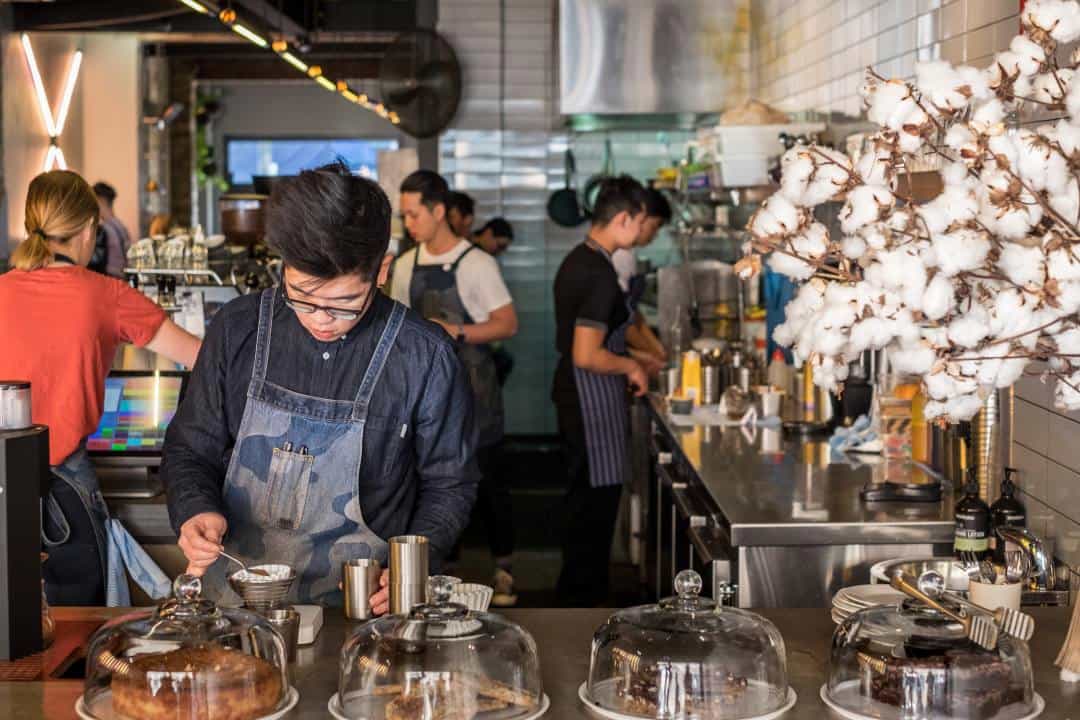
    1. Barista 

    Coffee culture is huge in Australia. Because the country is famous for its “flat white” drinks and quality coffees, there are many different cafes for international students to apply at. After all, where there is a demand, there will always be jobs! 

    Of course, working as a barista requires that you have strong customer service skills, are proficient in English, and are familiar with popular coffee orders and how to make them (although your workplace will likely also train you). Because cafe culture is so important to Australians, a job serving coffee is arguably one of the best ways to feel immersed in the local culture.  

    2. Bartender  

    For students, being a bartender has many perks. The hours you work rarely conflict with regular university class schedules. Being a bartender is a great way to meet new people. You could also earn tips. Tipping isn’t part of Australian culture per se, however it is becoming more common to tip service staff a small amount to thank them for good service.  

    If you’re interested in serving drinks, you could also consider getting a job at an Australian winery. Because Australia has so many wineries (about 2,361 in total), wine culture is not only a prevalent part of life in Australia. It’s also always usually a thriving industry with lots of job opportunities. 

    3. Server 

    Keen on the hospitality industry? Serving is another great job. And, even better if you get to work at a beachside restaurant. The University of AdelaideThe University of the Sunshine Coast, and The University of Melbourne are all institutions located by the coast, where international students have the opportunity to earn a living part-time while also experiencing Australia’s beautiful beaches.  

    4. Hotel and hostel jobs 

    A bonus of studying in a place that happens to be an internationally-famous vacation spot is that there are many jobs in hospitality. Students studying at institutions like The University of Tasmania, for example, can benefit from the local tourism industry by applying for jobs cleaning in hotels or cooking in hotel kitchens.  

    Australia’s hostels are also great spots to look for a job. Foreign students would be a great fit for hostel jobs like receptionists because of their international experience, age, and language skills. The bonus here is that you will find yourself working amongst like-minded and fun travelers.  

    5. Fruit picking 

    Australia has plenty of fruit picking jobs throughout the country. Strawberry, blueberry, and avocado picking jobs, for example, are all common jobs available to students in Australia. They’re also quite common to come across. Recently, the government also announced they’d allow students working in agriculture to work more hours every week - which is a big plus! We share more on that below.  

    How many hours can I work? 

    When studying in Australia, one of the main regulations for international student visa holders is that  they can work up to 48 hours every two weeks while studying and unlimited hours during study breaks on an Australian student visa. 

    The government changed those restrictions for students working in certain industries to support these sectors during the pandemic. Now, students can work unlimited hours in healthcare, disability care, aged care, agriculture, and tourism. 

    What’s the minimum wage in Australia? 

    Australia is known for its high minimum wage. The minimum wage in Australia is $24.10 per hour or $915.90 per week - this is a huge draw for many international students.   

    Where should I look for work?

    Your institution in Australia should have a career center to help you look for work. They should provide you with resume and interview tips, as well as a job board that lists open positions. We always recommend visiting your institution’s career centre when beginning your job search.  

    There are also job sites like IndeedSeek, and Jobactive from the Australian Government’s Department of Education, Skills, and Employment. All of these sites list thousands of part-time jobs for international students to consider.  

    Last updated 20 December 2024.

    Ready to go? 

    PTE can help you secure a spot at an Australian institution. Our test is faster, fairer, simpler, and accepted by all universities in Australia.   

    Learn more about PTE Academic.