How to be conversation ready for your US student visa interview

PTE Author
PTE Author
[Asset] Girl smiling into distance
Reading time: 6 mins

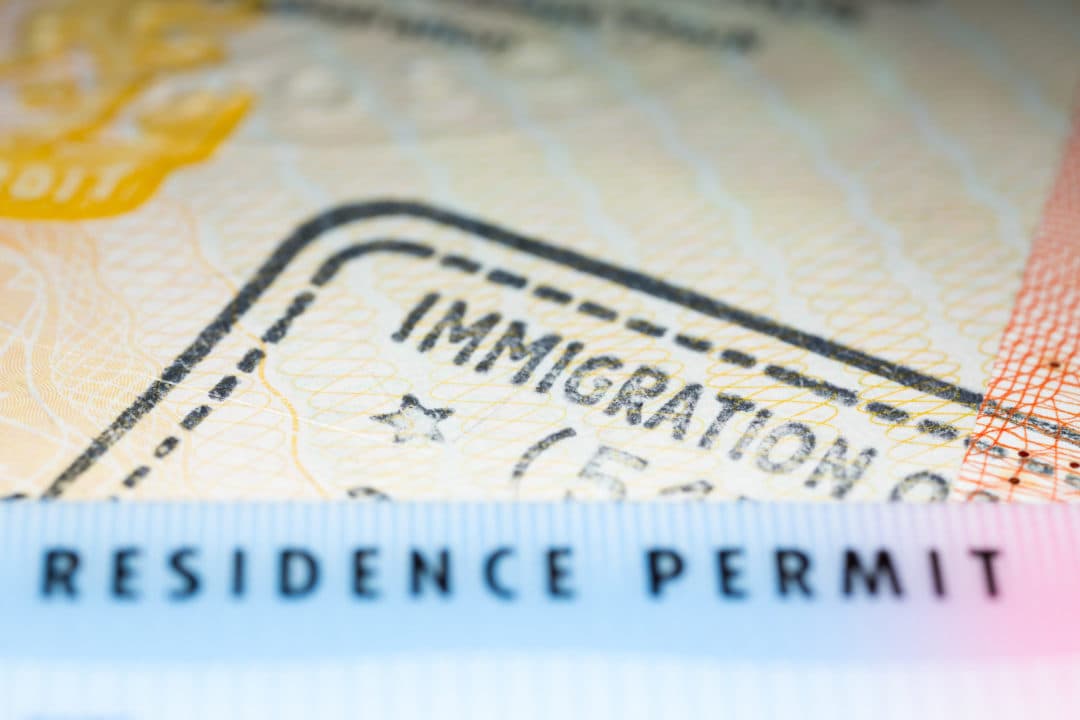
Getting a student visa for the US can be a long and stressful process, and one of the final hurdles is the visa interview.

Conducted in English, it’s one of the parts of the US visa application process that causes international students the most stress.

We’ll briefly recap the US student visa types and application process before sharing top tips on how to prepare and build your speaking confidence for a stress-free interview experience.

Understanding the different types US student visas 

To enter the US to study, you’ll need an F-1 or M-1 visa.

F-1 visas are intended for international students looking to study at colleges or universities. This visa category also covers other academic institutions, such as language schools.

M-1 visas are for vocational studies, such as culinary school, trade school programs, and healthcare technician courses.

If you’re not sure what type of visa you need and want to understand more about the different criteria, there’s an official US Visas website with a useful Visa Wizard tool to point you in the right direction.

How to apply for a US student visa

To study in the US, you’ll need to apply for and be accepted on a course at a Student Exchange and Visitor Program (SEVP) approved school before starting the visa process.

Once accepted, you’ll receive Form I-20 and need to pay the SEVIS (Student and Exchange Visitor Information System) fee.

There’s another round of forms and fees (DS-160 and the visa application fee), before it’s time to schedule that all-important visa interview at the US embassy or consulate in your home country.

On interview day, you’ll need to bring documents, such as your passport, academic transcripts, and travel history, as well as details of your intended travel to the US.

You’ll have an interview with a consulate officer and your visa will either be approved or may require further “administrative processing”.

The visa application process does vary depending on the local embassy or consulate, so check your local branch’s process on their website.

What is the US visa interview about?

Most applicants aged 13-80 must attend an in-person visa interview at a US consulate or embassy.

The interviewer is looking to understand your qualifications, study plans, and ability to support yourself during your time in the US.

They also want to make sure that anyone applying for a student visa intends to return to their home country after completing their studies.

You can find more information on what questions to expect at a US student visa interview on the International Student website.

Building your speaking confidence

A high-stakes English interview can be daunting, often making it tough to speak as confidently as you normally would when you’re in the classroom or chatting with friends. Here are four ways to build your speaking confidence ahead of a US visa interview.

1. Prepare answers to likely questions

Knowing the purpose of the interview makes it easier to anticipate the types of questions you’ll be asked. Make a list of anticipated topic areas and spend some time crafting concise answers. Once you’ve written your responses, it’s time to speak up! Practice saying the answers aloud every couple of days so that they feel familiar on the day. You don’t have to memorize the responses, but by planning out roughly what you’d like to say, you’re removing that extra pressure of thinking on the spot.

2. Immerse yourself in English

Confident speaking starts with great listening. The run-up to your visa interview is the perfect time to revisit that US sitcom you love or to start listening to an audiobook in English on your daily walk. You could even try repeating back new phrases or idioms that you hear to build your vocabulary and practice your pronunciation. If you’re listening to English shows, podcasts, and even following English social media accounts on a regular basis, then being faced with questions in English will feel less new and different on the day.

3. Find a language exchange partner

One of the most effective ways to brush up on your speaking skills is to find a language exchange partner. This could be a language swap, where you find someone who speaks English as their first language and who is learning your language, or conversation clubs where everyone is working on learning English. If you can’t find a local tandem partner, take a look at online communities, such as MeetUp, InterNations, or even Facebook, to find someone you can practice with online.

4. Use speech recognition technology 

If you can’t find a language tandem partner or are short on time, several language learning apps now include speech recognition — a technology first introduced by Mondly by Pearson.

This technology allows you to practice pronunciation and conversation without the pressure of another human waiting on or judging your responses.

In Mondly, for example, the app offers over 500 minutes of conversation practice with Augmented Reality (AR) and Virtual Reality (VR) options to allow you to practice conversations in realistic scenarios.

With less pressure and instant feedback, virtual conversations using speech recognition can be a great way to build your confidence ahead of real-life challenges like visa interviews.


It’s natural to feel the pressure with interviews — especially when your dreams of studying in the US hang in the balance.

Remember, interviewers aren’t looking for flawless language skills, just that your English is at a high enough level to fully participate in your course and enjoy life in the US.

By thinking through the likely topics and actively finding more opportunities to practice speaking English, you’ll be able to head into your visa interview with confidence.

Related Content

  • Image- Visa, 1080px
    How to apply for permanent residence in the UK
    By PTE Author
    Reading time: 4 minutes

    Do you want to settle in the UK? With great healthcare, world-class education, and lots of art, history, and culture, it’s an excellent place to call home.

    In this guide, we’ll explore how to take up permanent residence in the UK. We’ll delve into who can apply, and the online resources you’ll need to start your application.  

    Why Live in the UK 

    The UK is very multicultural. In fact, about 14% of the population in the UK was born abroad, according to the Migration Observatory at the University of Oxford.  About 35% of the immigrant population lives in London.  

    The UK has an excellent healthcare system, too. The National Health Service (NHS) is free for residents and has been ranked among the best in the world for its affordability, safety, and efficiency. UK countries also boast world-class research facilities, universities, and a strong education system in general. 

    How to apply for permanent residence in the UK  

    Permanent residence in the UK is also known as Indefinite Leave To Remain (ILR). With this, you can live and work in the UK permanently. You may also be able to apply for British citizenship after 12 months.

    There are different ways to apply to live permanently in the UK, depending on your situation. For example, you might be able to apply for ILR if: 

    You’ve lived in the UK for 5 years or more 

    If you have lived in the UK for 5 or more years, you should be able to apply for permanent residence in the UK. There are exceptions, though. For example, you won’t be able to apply for ILR if you’ve lived in the UK on a Tier 2 ICT work visa – given to people who’ve transferred to a UK company branch from abroad to work on a specific project.  

    You’re a family member of a UK citizen or permanent resident  

    If you’re the spouse, parent, or dependent relative to a UK citizen or permanent resident, you might also be eligible for ILR. Depending on the type of visa you’ve been living in the UK on, you might be able to apply for permanent residence as soon as 2 years.

    Check if you can get indefinite leave to remain and learn about the financial requirements needed to apply.   

    You have a work visa  

    You can apply for ILR if you’ve had a Tier 2 (General) work visa for five years. Your employer will need to sponsor you. You’ll also likely have to prove you earn at least £25,600 per year unless you work in healthcare or in a profession that’s in short supply in the UK.  

    Learn more about how to apply through ILR through your work visa

    Fees and processing times 

    According to UK Visas and Immigration, ILR takes about 6 months to process. The application for ILR costs £2,389. But keep in mind that many categories have financial requirements, which can make applying much for expensive. 

    English requirements 

    To apply for ILR, you might have to demonstrate your English skills are at least a B1 level. And, our PTE Academic UKVI secure English language test is recognized by the UK Home Office for all UK visas. The test is computer-based to reduce human bias, fast, and convenient – you get your results within 48 hours.  

    Discover how PTE Academic UKVI can help 

    The EU Settlement Scheme  

    If you’re an EU citizen – and don’t have IRL – you can apply for the EU Settlement Scheme.  

    Applying for the scheme is free, and with it, you’re granted either “settled” or “pre-settled status.” With settled status, you can stay in the UK indefinitely. With pre-settled status, you can stay for another 5 years – but can always apply for settled status later.  

    With both, you’ll get the right to work and study in the UK, access NHS, access public benefits and pensions, leave the UK to travel – and apply for British citizenship after 12 months.  

    Read our article about applying for the EU Settlement Scheme

    Ready to apply for permanent residence? 

    At PTE Academic, we’re here to help make your dream come true.

    Prepare for – and book – your approved English language test for permanent residence in the UK today.

  • Image- student, 1080px
    Scholarships for international students in Australia
    By PTE Author
    Reading time: 4 minutes

    Dreaming of studying in Australia? It’s never too early to start planning financially. Tuition fees for international undergraduate students typically range from AUD 35,000 to AUD 55,000 per year, depending on the university, course of study, and location. For example, STEM and medical programs are generally more expensive than humanities or social sciences​. However, there are lots of scholarships available to help pay for your studies. 

    In this article, we’ll look at what funding is available for international students in Australia. By the end, you’ll have a list of resources to explore to find the scholarship that’s right for you.  

    Are you eligible for a scholarship? 

    Australia offers grants, bursaries, and scholarships to people from around the world – including undergraduate, postgraduate, PhD, and vocational students. They’re funded by the government, universities, and private entities.  

    The Australian Government has an excellent scholarship search tool on its website. With it, you can search for funding opportunities based on a whole range of factors – like what country you come from, what university you’re attending, and your area and level of study. You’ll see how much each scholarship is worth, who it’s made for, and of course, whether you might be eligible.  

    Australian scholarship opportunities  

    Now, let’s cover a few scholarship opportunities for international students in Australia. 

    Australia Awards Scholarships 

    Australia Awards scholarships are offered to global student leaders from developing countries. They’re awarded by the Department of Foreign Affairs and Trade (DFAT), and support students with full tuition, airfare, living costs, and more. In 2021, 818 Australia Awards were given to students from 20 countries worldwide.  

    Destination Australia Awards  

    The Australian government introduced the Destination Australia program to provide both local and international students with the opportunity to study in more regional and remote areas of Australia – towns such as Ballarat (Victoria), Gatton (Queensland), and Lismore (New South Wales). The scholarships are given out through Australian universities and provide students with up to $15,000 AUD each year.  

    University-specific scholarships 

    In addition to government-provided scholarships, universities also offer their own scholarships to qualifying international students. There’s the James Rice Postgraduate Award at The Australian National University (ANU); International Stand Out Scholarship at Bond University, and the Adelaide Refugee & Humanitarian Postgraduate Coursework Scholarship at University of Adelaide.

    The point is, universities offer lots of scholarships for international students based on a long list of eligibility factors – like home country, area of study, and academic merit. 

    To search for funding opportunities at your own institution, use the search tool on the Australian Government website.

    A case study: Monash University scholarships 

    To get an idea of all the different scholarships that can be offered by Australian universities, we’ll take a closer look at one popular institution for international students: Monash University.  

    Monash University is recognized for its research and teaching, and offer more than 80 scholarships to international students, including:   

    Universities throughout Australia offer similar scholarships.  

    To apply for any scholarship or funding opportunity, you’ll need to contact the scholarship provider.  

    Other ways to fund your studies 

    As an international student, there are other options to pay for your studies in Australia.   

    One of the biggest perks of studying in Australia is that international students can work up to 48 hours every two weeks while studying and unlimited hours during study breaks on an Australian student visa. The minimum wage is $24.10 per hour or $915.90 per week,  meaning you’ll be able to put some money aside to help fund your education.

     Depending on where you are from, you might also be able to get a student loan or scholarship from your own country to study overseas.  

    Last updated 20 December 2024.

    PTE Academic can support you on your journey abroad. Our computer-based, bias-free English language proficiency test is accepted by all universities in Australia – as well as by the Department of Home Affairs for all visa categories. 

    Learn more about PTE Academic in Australia.

  • Image- calculator-800px x451px
    Living expenses in the UK for international students
    By PTE Author
    Reading time: 3 minutes

    Studying abroad in the UK can be expensive. International students need to budget for flights, tuition, textbooks, accommodation, and don’t forget the visa application.

    Of course, living costs in the UK for international students can vary depending on your lifestyle and where you live. So, in this blog, we’ll look at how much students in the UK spend on average each month – and explore how much it cost to live in a large city, compared to a smaller city.  

    Average student living expenses in the UK