
8 things to consider before moving abroad

PTE Author
PTE Author
image- new world 1080px
Reading time: 6 minutes

There’s a lot to think about when moving overseas. Will you need health insurance? What identity documents will you need to apply for? And of course, where will you live and work?

We’ve been there, and we get it! That’s why we’ve put together this list of 8 things to consider before moving abroad. Let’s take a look:  

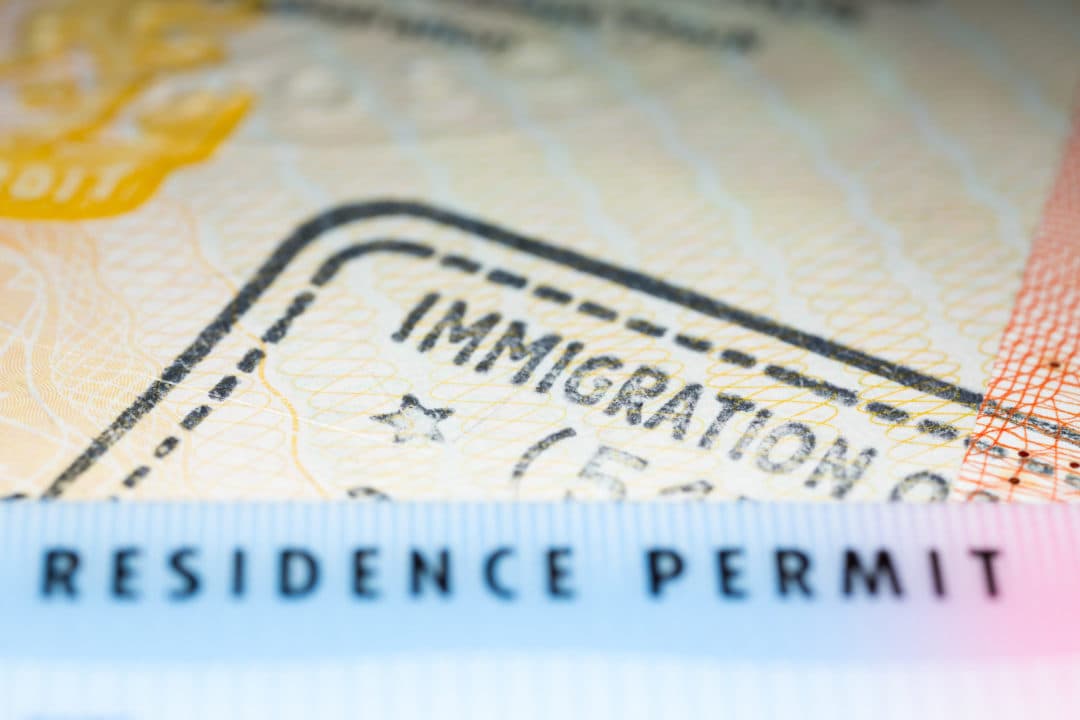
1. Understand visa requirements

If you plan to move abroad for more than six months, you might need a visa to live, work or study. So before making any travel plans, you should visit your destination country’s immigration website to ensure you’re eligible for a visa – and understand all the requirements. Many governments, for example, require applicants to take an approved English language proficiency test like PTE Academic to study or work in the country.

If you’re looking for visa support, you may also decide to hire a registered migration agent. These are immigration professionals and can complete your visa application for you, help prepare documents, and provide advice throughout the application process.

You can more about specific visa requirements on these government websites:

You might be interested in reading our article: Should you hire a migration agent to move to Australia?  

2. Find out if you’re eligible to work 

Just because you’ve been granted a visa to live in a country, doesn’t mean you have the right to work full-time.

Many student visas put a cap on how many hours people can work. For example, in Australia students are allowed to work up to 40 hours every two weeks during the school term. In the UK, students are able to work 20 hours per week during the semester. And in Malaysia, students can also work up to 20 hours a week, but only during school breaks longer than eight days.

If you’re not on a student visa, it is likely you’ll have permission to work full-time. However, many countries require you to apply for a social insurance number – or something similar – before you can.

In Canada, for example, permanent and temporary residents need to apply for a social insurance number after they land in the country, and it can take about 20 days to arrive.

3. Create a budget

Before moving to a new country, you should have some savings. In some cases, depending on your visa type and the country you’re moving to, you might be required to show proof of savings with your visa application.

Day-to-day living costs may also be more expensive abroad, and it could take you longer than anticipated to find a job – so it’s important to have money put away to help you settle in.

If you’re a student planning to move to Canada or the UK, we’ve put together some detailed guides that outline the living costs in each country: 

Many governments offer cost of living calculators online, which can be a great resource for new immigrants. Take a look at New Zealand’s cost of living tool, for example.

When you arrive, you’ll also need to open a bank account. This can often be done online. Some banks even have accounts specifically designed for newcomers and offer credit cards to help build credit history. 

4. Search for housing 

Looking for accommodation can be one of the most exciting parts of moving abroad. Once you find a place to call home, you’re able to really imagine what your new life will be like – you get to explore Google Maps from afar, check out neighborhood restaurants online, and plan where you might socialize with friends.

If you’re moving with a work visa, your new workplace might be able to help you find temporary accommodation. Likewise, if you’re moving abroad to study, your institution should offer housing options for international students – such as on-campus apartments or other homestay partnerships. It’s also a great idea to join local housing Facebook groups, where people post their apartments or houses for temporary or long-term rentals.

You might be interested in: How to choose international student accommodation in the UK.

5. Discover transportation options

Once you know where you’ll live, you can figure out how you’ll get around. Is your apartment close to public transportation? Or have you opted to live outside a city center, and will need to get around by car?

You could be able to drive with an international driver’s license right after landing abroad. But after a few months, lots of countries will require you to apply for a local driver’s license instead. If you’re moving to a country where it snows, it might also be a good idea to invest in driving lessons to learn how to drive safely on icy roads.

6. Apply for healthcare or insurance

You might not be automatically eligible for health coverage in your destination country, even if it offers universal healthcare to citizens.

In Canada, for example, each province administers its own publicly-funded healthcare. That means, if you’re a student, your eligibility for healthcare will depend on where you study. If you’re not eligible, your university should offer you insurance.

On the other hand, if you’re on a work visa or permanent resident visa, you may be able to apply for publicly-funded healthcare. But, there might be a waiting period before you’re able to have access – so it’s important to buy insurance to make sure you’re covered beforehand.

Always check with the local government in your destination country to see what your rights are regarding healthcare. It’s also important to research the mental health services that may be available once you arrive. If you’re a student, your university may offer counseling services on campus.  

7. Keep up to date with travel regulations

Travel regulations change quickly, so it’s essential to keep up to date on what you’ll need to do before – and after – arriving at your destination country.

Always consult the health authorities in the country you’re traveling to ensure you follow public health guidelines – and you’ll be allowed to enter the country. 

8. Don’t forget about the little things 

When moving abroad, we tend to focus on the big things – like housing, work, and healthcare. But there are lots of little things to think about, too! Remember to:

  • Close your utility accounts – like internet and hydro – before leaving home (and do it before the cut-off date, so you don’t get charged extra)

  • Unlock your mobile phone so you’ll be able to use a local SIM card, and get a power plug adapter for your charger if you need one.

  • Bring a few things that remind you of home and that you won’t be able to buy abroad. Something as simple as packing your favorite face wash or snack food can make a big difference when just starting to settle in.

Overall, getting a head-start on your travel preparations will help you to reduce stress and hit the ground running when you arrive.

Related Content

  • Image- student, 1080px
    Scholarships for international students in Australia
    By PTE Author
    Reading time: 4 minutes

    Dreaming of studying in Australia? It’s never too early to start planning financially. Tuition fees for international undergraduate students typically range from AUD 35,000 to AUD 55,000 per year, depending on the university, course of study, and location. For example, STEM and medical programs are generally more expensive than humanities or social sciences​. However, there are lots of scholarships available to help pay for your studies. 

    In this article, we’ll look at what funding is available for international students in Australia. By the end, you’ll have a list of resources to explore to find the scholarship that’s right for you.  

    Are you eligible for a scholarship? 

    Australia offers grants, bursaries, and scholarships to people from around the world – including undergraduate, postgraduate, PhD, and vocational students. They’re funded by the government, universities, and private entities.  

    The Australian Government has an excellent scholarship search tool on its website. With it, you can search for funding opportunities based on a whole range of factors – like what country you come from, what university you’re attending, and your area and level of study. You’ll see how much each scholarship is worth, who it’s made for, and of course, whether you might be eligible.  

    Australian scholarship opportunities  

    Now, let’s cover a few scholarship opportunities for international students in Australia. 

    Australia Awards Scholarships 

    Australia Awards scholarships are offered to global student leaders from developing countries. They’re awarded by the Department of Foreign Affairs and Trade (DFAT), and support students with full tuition, airfare, living costs, and more. In 2021, 818 Australia Awards were given to students from 20 countries worldwide.  

    Destination Australia Awards  

    The Australian government introduced the Destination Australia program to provide both local and international students with the opportunity to study in more regional and remote areas of Australia – towns such as Ballarat (Victoria), Gatton (Queensland), and Lismore (New South Wales). The scholarships are given out through Australian universities and provide students with up to $15,000 AUD each year.  

    University-specific scholarships 

    In addition to government-provided scholarships, universities also offer their own scholarships to qualifying international students. There’s the James Rice Postgraduate Award at The Australian National University (ANU); International Stand Out Scholarship at Bond University, and the Adelaide Refugee & Humanitarian Postgraduate Coursework Scholarship at University of Adelaide.

    The point is, universities offer lots of scholarships for international students based on a long list of eligibility factors – like home country, area of study, and academic merit. 

    To search for funding opportunities at your own institution, use the search tool on the Australian Government website.

    A case study: Monash University scholarships 

    To get an idea of all the different scholarships that can be offered by Australian universities, we’ll take a closer look at one popular institution for international students: Monash University.  

    Monash University is recognized for its research and teaching, and offer more than 80 scholarships to international students, including:   

    Universities throughout Australia offer similar scholarships.  

    To apply for any scholarship or funding opportunity, you’ll need to contact the scholarship provider.  

    Other ways to fund your studies 

    As an international student, there are other options to pay for your studies in Australia.   

    One of the biggest perks of studying in Australia is that international students can work up to 48 hours every two weeks while studying and unlimited hours during study breaks on an Australian student visa. The minimum wage is $24.10 per hour or $915.90 per week,  meaning you’ll be able to put some money aside to help fund your education.

     Depending on where you are from, you might also be able to get a student loan or scholarship from your own country to study overseas.  

    Last updated 20 December 2024.

    PTE Academic can support you on your journey abroad. Our computer-based, bias-free English language proficiency test is accepted by all universities in Australia – as well as by the Department of Home Affairs for all visa categories. 

    Learn more about PTE Academic in Australia.

  • Image- calculator-800px x451px
    Living expenses in the UK for international students
    By PTE Author
    Reading time: 3 minutes

    Studying abroad in the UK can be expensive. International students need to budget for flights, tuition, textbooks, accommodation, and don’t forget the visa application.

    Of course, living costs in the UK for international students can vary depending on your lifestyle and where you live. So, in this blog, we’ll look at how much students in the UK spend on average each month – and explore how much it cost to live in a large city, compared to a smaller city.  

    Average student living expenses in the UK

  • Image- UK, 1080px
    Applying for the EU Settlement Scheme: what you need to know to get British citizenship
    By PTE Author
    Reading time: 6 minutes

    At the beginning of this year, new Brexit-related rules went into effect in the UK and the EU.  They’ll have a big impact on immigration and travel – including on how people will be able to move to the UK to live, work and study. 

    If you’re an EU citizen—and started living in the UK before 2021—immigration rules won’t change for you until June. But after that, you might have to apply for the EU Settlement Scheme to stay in the country. 

    More than 4.3 million people have been approved for the scheme already. And, they’re on the path to receiving a British passport. With the EU Settlement Scheme, EU citizens can apply for British citizenship after 12 months. 

    In this blog, we’ll explore more about the scheme and how to apply for citizenship. We will also look at the English language requirements you’ll need to keep in mind as an EU citizen. 

    Keep in mind: We aren’t immigration agents. For the latest information and official updates, please visit the GOV UK website. 

    First, what is the EU Settlement Scheme?

    The EU Settlement Scheme is a program set up by the UK government. It allows EU, Swiss, and EEA citizens to keep living in the UK after June 2021. It’s free to apply, and once you do, you’ll be granted either: 

    • Settled status – You’ll get this if you’ve lived in the UK continuously for five years. You will be able to stay in the UK indefinitely provided you don’t leave the UK for 5 years consecutively.

    • Pre-settled status – You’ll get this if you’ve lived in the UK for less than five years. With pre-settled status, you’ll only be able to stay in the UK for another five years but can always apply for settled status later if you want to settle permanently. 

    With settled status, as we mentioned, you’ll also have the opportunity to apply for British citizenship. Although, many people have decided to apply for citizenship right away instead of going through the scheme – for example, if they have a British parent or spouse. 

    With citizenship, you’ll have the right to live permanently in the UK with a British passport, which means you’ll no longer be subject to immigration controls. You’ll also be able to work and study in the UK, sponsor your family members to migrate, access NHS healthcare, access public benefits and pensions  – and of course, vote in elections. 

    The Mayor of London’s website has a comprehensive FAQ on the EU Settlement Scheme. You can also find out more information on the official GOV UK page.

    How to apply for British citizenship 

    If you’re interested in applying for British citizenship, there are a few ways to do so. For example, you could be eligible if you: 

    • have a British civil partner or spouse;

    • were born in the UK;

    • have a British parent;

    • have settled status under the EU Settlement Scheme. 

    The requirements for citizenship are often different, depending on why you’re applying and how you’re eligible. But if you’re applying under the EU Settlement Scheme, in most circumstances you’ll have to show you: 

    • have been living in the UK for more than five years and will continue to do so;

    • are of good character;

    • have passed the Life in the UK Test, which consists of 24 questions on British traditions;

    • are knowledgeable in English, Welsh, or Gaelic. You will also need to take an approved English test for UK citizenship.

    Learn more about how to apply for British citizenship with the scheme here