5 famous Canadian authors and where they went to university

PTE Author
PTE Author
Image - reading book 1080px
Reading time: 6 minutes

Are you thinking about moving to Canada to study? Get inspired by these talented Canadian authors and discover the universities they attended. Find out which Canadian universities accept PTE Academic now! 

Canada inspires good writing. The northern country is home to many talented literary figures and authors whose works have been celebrated worldwide for decades. From old classics like Anne of Green Gables to newer works like Women Talking and The English Patient, Canadian literature has really made a mark.  

But who are the masterminds behind these incredible stories? More importantly, where in Canada did they study?  

Here, we take a look at some of Canada’s most talented writers and learn where they earned their university degrees. 

This list includes reputable institutions from the scenic east coast, to the quiet prairies to highly-regarded schools in Ontario. And if you have yet to read these writers’ books, add them to your reading list! 

1. Lucy Maud Montgomery  

Lucy Maud Montgomery published Anne of Green Gables in 1908. It became one of Canada’s most famous books. The story is set in the Canadian province of Prince Edward Island which is where the author was born.  

The fictional story is about a red-haired, impulsive orphan growing up in a small eastern Canadian town. Though it was rejected by many publishers at first, the novel went on to sell more than 50 million copies. It has also been translated into 36 languages.  

More recently, it was developed into a TV series called Anne With An E, which can be streamed on Netflix.  

Education: Dalhousie University 

Lucy Maud Montgomery studied at Dalhousie University in Halifax, Nova Scotia. She started her studies there at age 21 in 1895. At the time, it wasn’t common for women to be seen on campus. During her time at Dalhousie, she argued that more women should seek a university education.  

Feeling inspired to study at Dalhousie University? The good news is that they accept PTE as proof of your English level.  

2. Joseph Boyden  

Joseph Boyden is a Canadian novelist and short-story writer. Boyden is best known for writing about First Nations culture. He is best known for his books Three Day Road, Through The Black Spruce, and The Orenda. In his writing career, Boyden has collected many Canadian literary prizes. These include Canada Reads, the Scotiabank Giller Prize, the Rogers Writers’ Trust Fiction Prize, The Governor General’s Award for fiction, and the Canadian Booksellers Association Fiction Book of the Year. Boyden grew up in North York, Ontario.  

Education: York University  

He studied creative writing at York University where he was admired by a professor for his intensity and determination. He also has honorary degrees from Wilfrid Laurier University, Trent University, Nipissing University, and Algoma University.  

Do you want to follow in Boyden’s footsteps? York University accepts PTE

3. Alice Munro 

Alice Munro is one of the best authors to have ever come out of Canada. In 2013, she won the Nobel Prize in Literature. She is known and praised as being the master of the short story. Her books include Dear Life, Dance of the Happy Shades, The Lives of Girls and Women, Who Do You Think You Are and The Love of a Good Woman. When she won the Nobel Prize, she was quoted saying that she didn’t expect to win.  

Education: Western University  

As for her education, Munro studied English at Western University. She started at the university in 1949. She actually published her first-ever work at the university’s campus literary magazine called Folio. Munro is one of Western University’s most famous alumni.  

If you’ve bookmarked Western University as a place to study, it also accepts PTE.  

4. Miriam Toews 

Miriam Toews is a bestselling author of Women Talking, All My Puny Sorrows, and A Complicated Kindness. Toews has collected many literary awards in Canada. Her major awards are the Governor General’s Award for English-language fiction, Canada Reads, and the Scotiabank Giller Prize. Her novel Women Talking is a fictional story based on a Mennonite colony in Bolivia. It became a bestseller and was shortlisted for the Governor General’s Award. Toews lives in Toronto.  

Education: University of Manitoba 

She earned her first degree at the University of Manitoba where she studied film studies and earned a bachelor of arts degree.  

Check out the University of Manitoba for yourself, the highly regarded institution also accepts PTE. 

5. Michael Ondaatje 

Michael Ondaatje is considered one of Canada’s most important contemporary writers. His novels and poetry are required reading in many Canadian schools and universities. Ondaatje was born in Sri Lanka but moved to Canada in 1962 and stayed. His most famous book is The English Patient. It’s a war-era love story set in Italy. Not only did it win the Man Booker Prize, but it was also turned into an award-winning movie in 1996. Ondaatje also wrote In The Skin Of A Lion, The Cat’s Table, and Anil’s Ghost. In addition to the Booker Prize, Ondaatje has also won Governor General’s Awards and the Giller Prize. He is also a member of the Order of Canada. Before becoming the famous author that he’s known as today,  

Education: Queen’s University 

Ondaatje studied ag Queen’s University in Kingston, Ontario in 1967. He’s one of the university’s most celebrated past students. Currently, he lives in Toronto.  

Queen’s University is a great choice for international students and accepts PTE

Travel to study in Canada 

Thinking of studying in Canada? With so many incredible universities, Canada is an obvious pick for many international students. In order to secure a spot at a Canadian university though, students coming from abroad must prove English proficiency.  

PTE Academic can help make your dreams of studying in Canada come true. The English language test is recognized worldwide. Many top Canadian universities including the ones mentioned above accept PTE scores as part of their application process.  

Check out PTE test centers and view prices in Toronto, Ottawa, Montreal, Edmonton, Calgary, or Burnaby to take the first step towards your Canadian university career.

Related Content

  • Image- A guy on headset and using laptop- 1800px
    Strategies to Improve English Listening Skills
    By PTE Author
    Reading time: 3 minutes

    Part 3: Listening in PTE Academic requires many hours of practice to maximize your score. Whilst practicing other parts of the test you would have learned certain core English skills that are needed in Part 3 that you can further improve.

    To do well in the listening questions set a daily goal of listening regularly to authentic English texts. The more you listen, the better you will do in the test.

    When choosing recordings to listen to, do not choose examples that are too difficult. Start at a level you are comfortable with and build up to a higher level example as you improve.

    If you find the recording too difficult, try to just listen for the content words, such as nouns, adjectives, and verbs so that you can pick up the meaning of the recording.

    Always try to listen as many times as you need to fully understand the content. Try to go back and listen to the same recording a few days later to help you remember the content, vocabulary, and pronunciation.

    Use an Online Tone Generator tool to help slow down recordings and keep the original pitch of the speaker. Try not to slow it down so much that you translate the meaning into your own language as this will not help improve your listening skills.

    Don’t forget to be an active listener and focus on what you are hearing.

    What should I listen to?

    As the speakers in PTE Academic have various accents, we recommend listening to a wide range of speakers from different backgrounds to learn the different pronunciations used.

    Try to listen to speakers from Britain, America, Canada, Australia, and New Zealand, as well as second language speakers from India, China, and Europe.

    Some of the below podcasts will help:

    You can also listen to radio around the world at Live Online Radio.

    When listening keep a listening diary to write down the titles of recordings along with notes. Listen for stressed words in the recordings as these are usually the most important.

    The easiest way to take notes will be to use abbreviations and/or symbols as you will not have enough time in the test to write full words.

    From your notes, you should be able to answer the following questions:

    • What was the topic and main ideas?

    • What accent did the speaker/s use?

    • Was it interesting?

    • What did you learn from it?

    • What vocabulary did you learn?

    • Do you want to listen to more texts from that site?

    • Did you need to slow the text down? If so, what speed?

    • How many times did you listen to the text? Do you want to listen again?

    • Do you feel your listening skills are improving?

    What's next?

    To learn more about how to apply listening skills and improve test results, view our self-improvement strategies:

  • Image- writing 1080px
    Writing: core English skills part 1
    By PTE Author
    Reading time: 4 minutes

    Part 1 of PTE Academic includes a variety of speaking and writing question types. For writing questions, you may need to improve your skills, such as grammar, spelling, and vocabulary.

    To help practice these skills, we’ve put together some tips on how to improve for this part of the test.

    Grammar

    To help improve grammar, get into the habit of reading something in English every day.

    Create a reading plan and a reading goal to improve your grammar. Start by reading for at least 30 minutes a day.

    It’s recommended that you read a range of texts that you find interesting. Also read news articles on English news sites such as:

    It is hard to use correct grammar in long sentences, so try to keep sentences short: about 18 to 30 words. You should also practice with a variety of short and long sentences.

    Always remember to:

    • End sentences with a full stop (period)

    • Use uppercase and lowercase correctly

    Try to avoid run-on sentences. These are sentences which should be cut to make a shorter sentence, or properly joined to make a grammatically correct sentence.

    You can avoid run-on sentences by using compound and complex sentences, which will also help improve your score. Use commas when writing complex sentences. Some examples of the compound and complex sentences can be found through the British Council’s Learn English website.

    To perform well, learn to proofread your writing so that you can complete the question types as correctly as possible.

    If you can identify areas that you often get wrong, you should work on improving these areas. Ask your English teacher for help, or if you don’t have an English teacher, you can look up your common errors on the internet.

    Spelling

    PTE Academic recognizes and accepts US, UK, Australian and Canadian spelling. However, you should be careful with your spelling. Once you have chosen a spelling convention for one question, keep using it within that question. You can change the spelling format in answers to other questions if you like.

    Vocabulary

    To do well in the writing test, you need to have a broad vocabulary. You should have a good dictionary to help you. A good dictionary will have the meaning, related forms of the word, and example sentences.

    Longman Dictionaries are a great resource to help you improve your vocabulary.

    You should expose yourself to new words at least ten times a day to expand your vocabulary. To learn a new word you should read it, write it and listen to it many times over a couple of days so you can understand the word and use the correct pronunciation.

    Another way to expand your vocabulary is to learn the word forms of words you already know.

    For example, climate (noun), acclimatization (noun), climatic (adjective), acclimatize (verb) etc.

    Each of the above word forms mean something slightly different, so try to learn all the meanings of each word.

    In PTE Academic you will score higher points for vocabulary if by using academic words in your writing. Try to learn some of the most frequent academic words used in writing.

    Also, think about using synonyms in your writing to avoid repetition of words. A thesaurus can help you find synonyms for common academic words.

    The other elements of your vocabulary to consider are correct common prefixes and suffixes, which are added to the base words. Prefixes can change the meaning of a word, for example, expensive and inexpensive.

    Adding a suffix, however, can change the part of speech of the word. A common suffix used is ly, which can change an adjective into an adverb (quick/quickly), ment can change a verb into a noun (entertain/entertainment).

    There are also collocations, which help you use the right word combinations, as some English words just don’t work well together. To identify collocations, read the PTE Academic collocation list.

    PTE Academic is not very strict about accepting only academic vocabulary. You will not lose points for the use of personal pronouns. You will, however, score more points by using higher-level academic vocabulary in the correct way.

    You should try to keep a notebook of new words you learn, their meanings, synonyms, and all the parts of vocabulary that may help you in the test.

    The last core skill required for the writing test is written discourse.

    Want more prep ideas?

    Plus, explore Smart Prep, which combines all our practice materials in one place, so it's easier for you to stay on track with your PTE preparation.

    • Smart Prep is a clear path to test day, guiding you through the official paid and free resources available for your test

    • It can be accessed whether you’ve booked a test or not – just create, or sign in to your myPTE account

    • Preparation materials include guided practice tests, introductory videos, video courses and test tips.

    Ready to get started?

  • Image- Two Asian man in a cafe setting- 800px
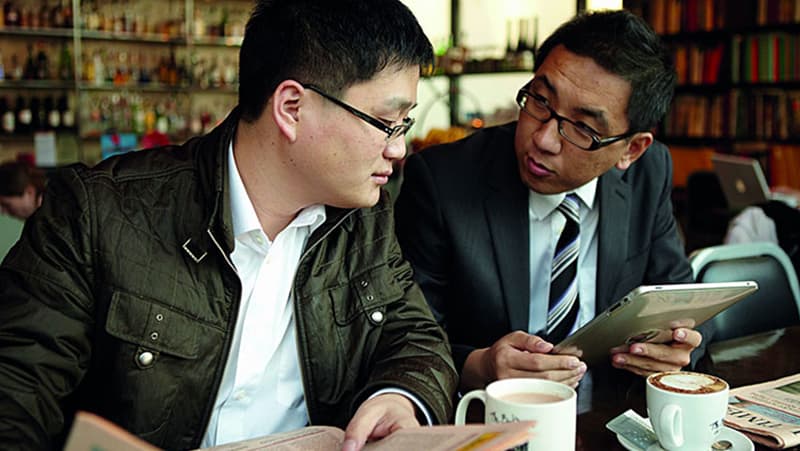
    How does PTE Academic mark different accents?
    By PTE Author
    Reading time: 2 minutes

    Your accent will not stand in the way of success!

    Everyone has an accent. You might even be a proficient or fluent English speaker, but with an accent, other people find hard to understand.

    So how does your accent affect your score when you take PTE Academic?

    Because PTE Academic is marked by a computer, it can cut out potential obstacles, such as a human examiner being unfamiliar with your particular accent.

    When the automated scoring program was being designed the computer was trained using candidates from over 126 countries, speaking more than 90 different languages, so it recognizes accents from around the globe. As a result, PTE Academic’s automated scoring technology recognizes and marks everyone’s speech equally and with equal accuracy, regardless of where they are from. What the PTE Academic scoring engine looks for is intelligibility and clarity of response (not which accent you are speaking in) – did you answer in a clear and understandable way that any international speaker of English would understand?

    To hear more on this, listen as one of our leading independent advisors, Dr Alistair Van Moere, a member of Pearson’s Technical Advisory Group, explains how it works.